
Last updated November 20, 2026
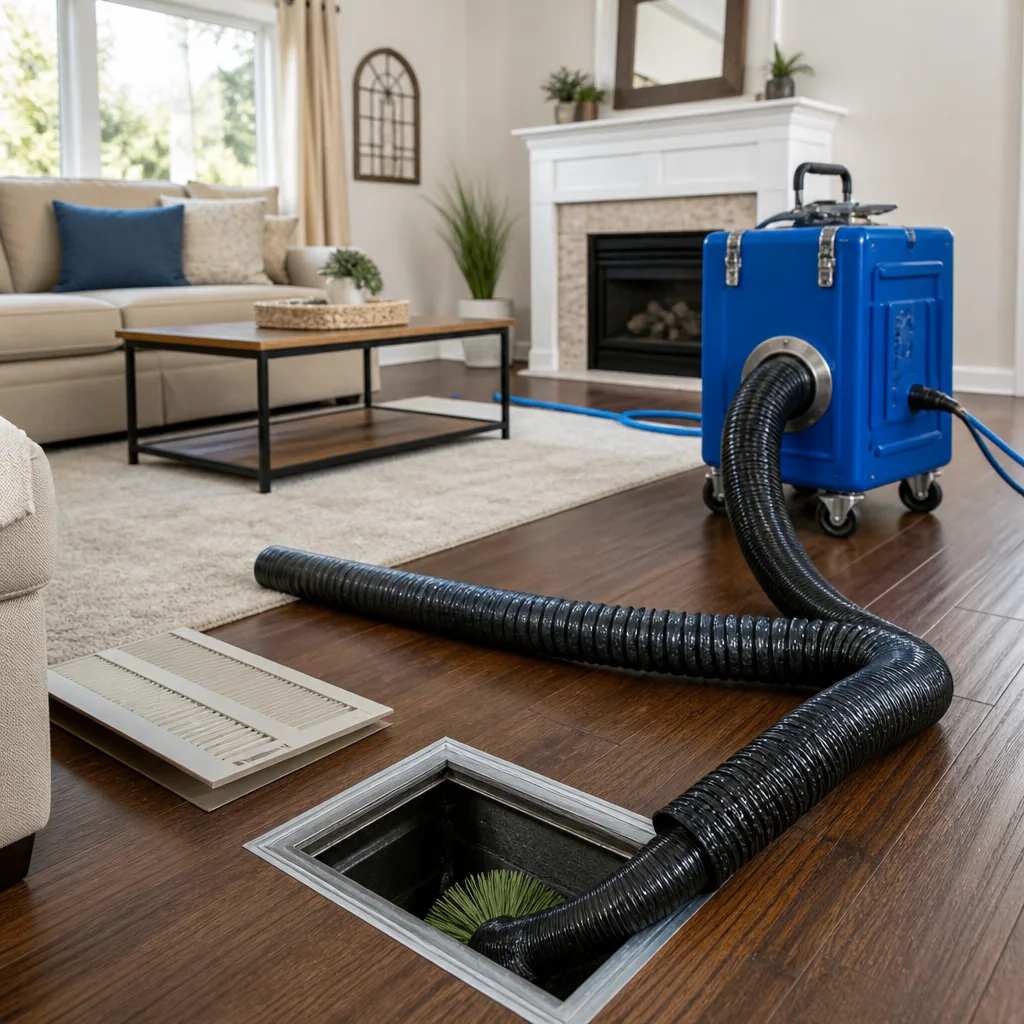 Whole-home duct cleaning
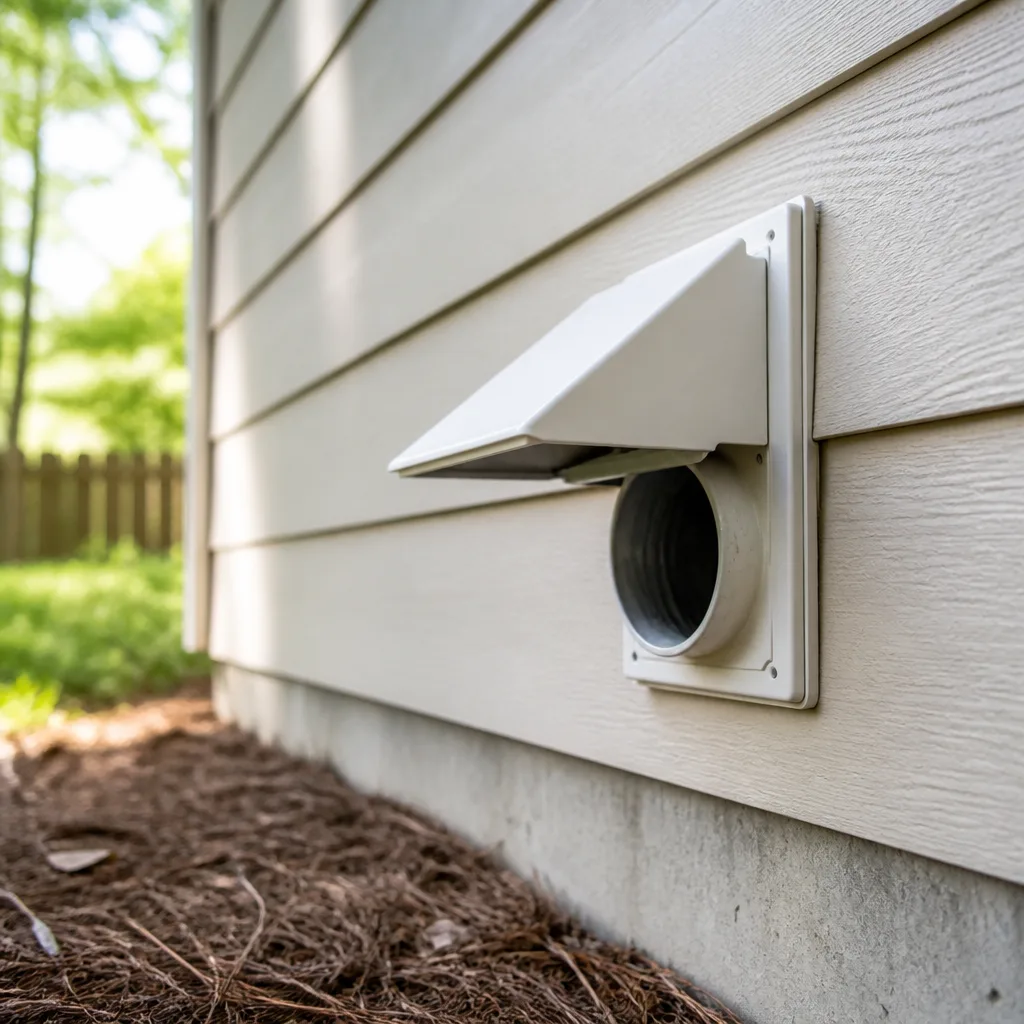 Dryer vent cleaning
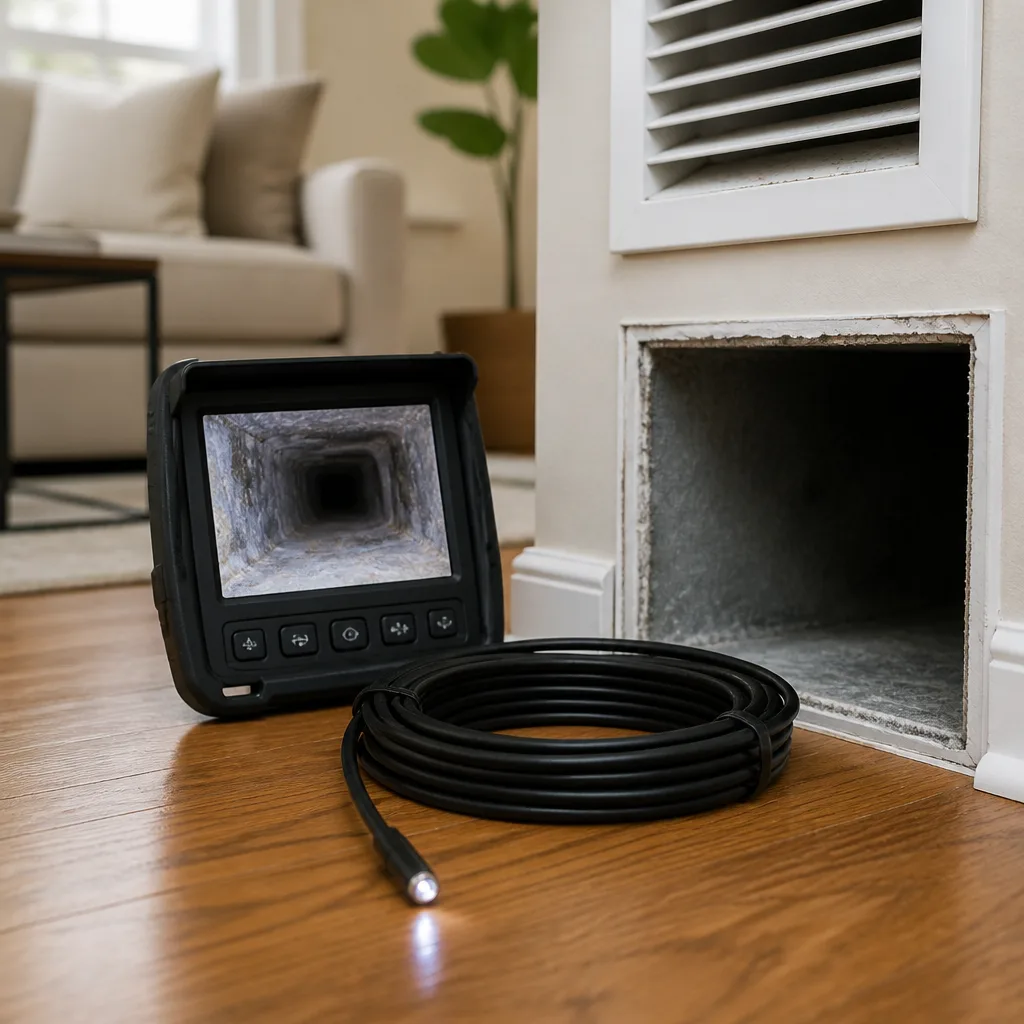 Camera inspection
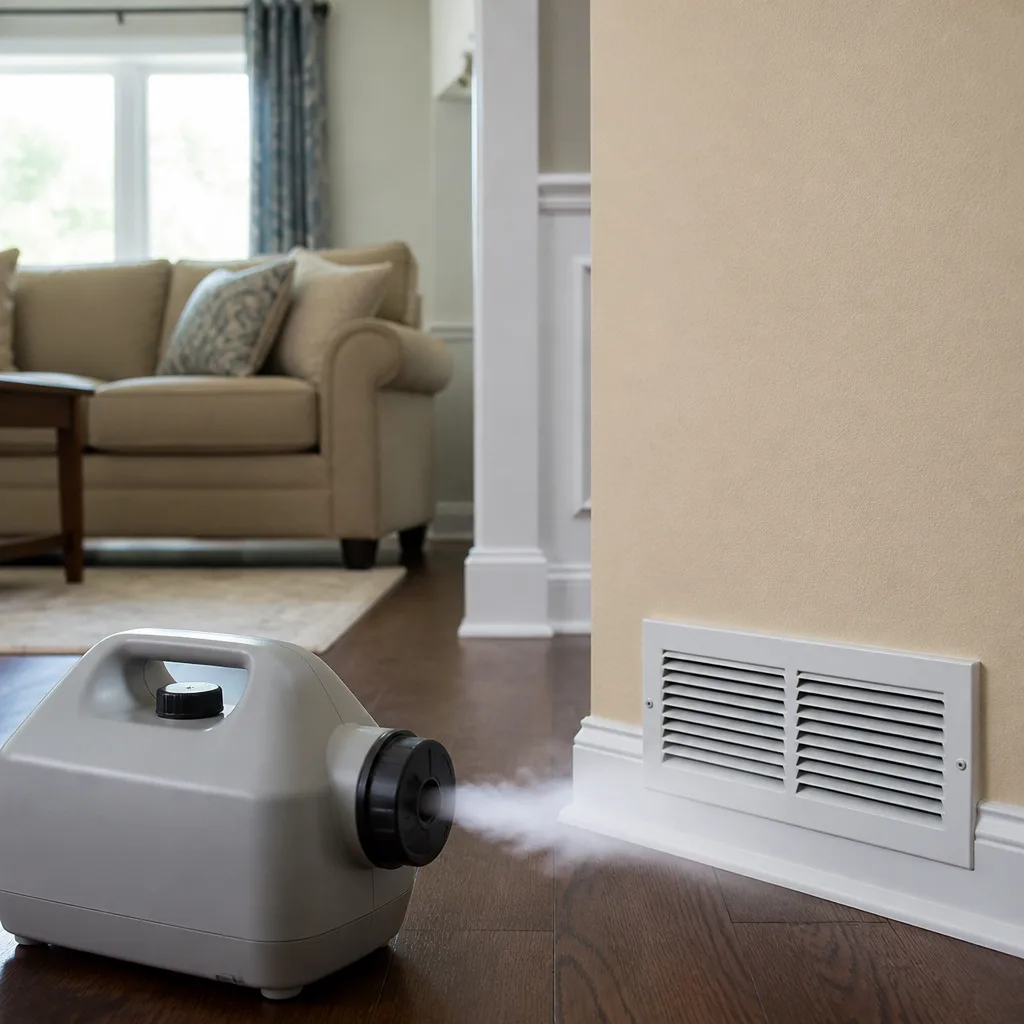 Sanitizing & deodorizing
Whole-system duct and dryer vent check with before-and-after photos - you see exactly what came out of your vents
That "$99 whole-house special" is a bait ad - the real number appears once they are in your hallway, or the "clean" is a shop-vac at the register. We photograph the inside of your ducts before and after instead.
Air Duct Cleaning Troubleshooting in Placentia: Common Problems and How to Fix Them
A clogged duct register and a failing blower motor can produce nearly identical symptoms: weak airflow, rooms that never get comfortable, a system that runs longer than it should. One is a duct problem. The other is an HVAC problem. Telling them apart before anyone shows up saves you from paying for the wrong fix, and it’s the single most useful diagnostic skill a homeowner can build. This guide walks through how to read your system’s symptoms the way a technician would, from pressure and temperature checks at the register to decoding what a musty or burnt smell actually means. Everything here is written for Placentia homes, where mild winters, original tract-home ductwork, and flex-duct joints that have had decades to loosen all shape which problems show up and how to spot them.
Quick Answer
Most airflow and comfort problems in Placentia homes trace to the duct system, not the HVAC unit: loose flex-duct joints, crushed or disconnected runs, clogged registers, and leaky seams that bleed conditioned air into attics and crawlspaces. You can narrow down which one you’re dealing with using simple airflow and temperature checks at the registers before calling anyone. When the symptom turns out to be a duct-side failure rather than an equipment failure, the fix is usually cleaning combined with repair and sealing, not a new blower motor.
Styles & brands we work with
- Whole-home duct cleaning
- Dryer vent cleaning
- Camera inspection
- Sanitizing & deodorizing
Table of Contents
- Duct-Side Airflow Loss vs. HVAC Failure: How to Tell the Difference
- Three Checks You Can Run at the Register
- What Your Duct Odor Is Telling You: Musty, Burnt, and Chemical
- Why Some Rooms in Placentia Run Hot or Cold
- The Five Most Common Duct Failure Points You Can See
- When Cleaning Alone Won’t Fix the Symptom
- Common Mistakes to Avoid
- When to Call a Professional
Duct-Side Airflow Loss vs. HVAC Failure: How to Tell the Difference
The first question in any troubleshooting sequence is simple: is the system moving air, and is it moving the right amount to the right rooms? A failing blower or a dying capacitor usually produces weak airflow everywhere at once. A duct problem tends to be uneven. Some rooms get plenty of air, others get a trickle, and the equipment itself sounds normal. That distinction matters because the causes live in completely different parts of the house, and the repair costs land in different places too.
Here’s how the two failure families tend to present:
- Duct-side symptoms: uneven airflow room to room, cold spots at certain registers, whistling or rattling at the grille, dust blowing out right after the system starts, visible gaps at accessible joints, higher utility use with no other explanation.
- HVAC-unit symptoms: no airflow anywhere, the indoor unit short-cycling, ice on the refrigerant lines, a blower that won’t spin, the breaker tripping, or the system running constantly but never reaching setpoint.
Plenty of calls start with a homeowner convinced the air conditioner is dying when the real issue is a disconnected flex run in the attic that has been dumping conditioned air into the dark for years. In our experience, that’s a common pattern in older Placentia tract homes where the ductwork was installed with the original build and the flex joints have simply worked loose. Sorting out which side of the system you’re on is the whole point of the checks below.
Three Checks You Can Run at the Register
You don’t need instruments to narrow the problem down. Three simple observations, run in this order, tell you a lot before a technician arrives.
- The tissue test. Hold a single square of tissue or thin paper against the supply grille while the system runs. If it clings and flaps, you have airflow. If it barely moves, that register is served by a restricted or disconnected run. Compare several rooms; the uneven ones are your suspects.
- The temperature split. With a thermometer or an infrared gun, compare the air coming out of the supply register to the room air. A healthy supply should feel noticeably cooler than the room in cooling mode. If one register blows near room temperature while others are cold, that run is losing conditioned air before it reaches you, which usually means a leak or a disconnected joint.
- The dust test. Turn the system off, let the dust settle, then run it and watch the register. A visible puff of dust, or a dark smudge building at the grille, means the duct surface is loaded and the airflow is picking it up. That’s a cleaning signal, not an HVAC signal.
None of these checks are a substitute for a professional inspection, but they let you describe the problem accurately when you call, and they let you push back if someone is steering you toward equipment replacement you may not need. Run them once, write down which rooms fail and which pass, and you’ll walk into the conversation with a clear picture.
What Your Duct Odor Is Telling You: Musty, Burnt, and Chemical
Smell is diagnostic data. The type of odor narrows the cause faster than almost any other symptom, and the three main families each point somewhere different in the system.
- Musty or damp-earth odor. This almost always signals moisture in the duct system or biological growth on duct surfaces. In Placentia, where the dry climate keeps humidity manageable, a musty smell usually points to a leak that has pulled attic or crawlspace air into the return, or to condensate from the indoor coil migrating where it shouldn’t. Cleaning plus sanitizing is typically the starting point; the moisture source has to be sealed or it returns.
- Burnt or hot-plastic odor. This points toward the equipment, not the ducts: a failing blower motor, an overheating component, or wiring beginning to break down. Turn the system off and have it looked at before running it again. This is the one odor category that is an HVAC issue first.
- Chemical or solvent odor. Fresh paint, adhesives, new flooring, or renovation dust that has been drawn into the return. It settles on duct surfaces and gets pushed back out every time the blower runs. A build-out or remodel in a Placentia home is a common reason a system suddenly smells wrong.
Cleaning with professional-grade equipment removes the source, but the odor tells you which follow-up matters. Musty air needs sealing to keep the moisture source out. Chemical air after a renovation needs a full cleaning and possibly sanitizing with a Guardsman-backed treatment to cut what’s left on the surfaces. If the smell is burnt, call about the equipment first; the ducts can wait.
Why Some Rooms in Placentia Run Hot or Cold
The default homeowner explanation for an uneven room is dampers or thermostat settings. That’s rarely it. In Placentia’s older tract homes, the far rooms from the air handler tend to be duct-limited, not damper-limited, because the flex run serving them is longer, has more joints, and has had more opportunities to develop a leak. By the time air reaches those rooms, a meaningful share of it has bled into the attic.
A few patterns are worth knowing:
- A room that runs hot in cooling mode is usually losing cold air before it arrives. A leak near the air handler affects the whole house; a leak near the end of the run affects one room.
- A room that feels stuffy but not hot is a flow problem, not a cooling problem. The register is moving less air than it should, so the room never flushes out.
- A room above a garage or at the end of a long truss span is doing double duty: it gets the last of the airflow and it’s exposed to more heat gain through the duct run itself.
The practical test is to close off the good rooms temporarily by wiping a hand over the grille and comparing airflow between rooms. If the difference is dramatic, the problem is in the ducts. A technician looking at Placentia duct systems will typically focus on the joints and connections serving the weak room. Repair and sealing often resolves the unevenness without touching the equipment. On many homes we straighten what’s there through a full air duct cleaning and follow it with sealing, and the comfort gap closes.
The Five Most Common Duct Failure Points You Can See
If your ductwork is accessible, attic or garage, you can inspect it safely from the outside. Don’t climb into tight spaces, and don’t handle flex duct you can’t support yourself properly while handling. A strong flashlight and a phone camera used at arm’s length will show you the five failure points that account for most duct-side symptoms.
- Joints where flex duct meets the register boot. Look for daylight through the seam, a loose zip tie, or a joint that has slipped free of the boot. This is the single most common failure point in the house.
- Crushed sections. Flex duct that has been stepped on, pinched by a truss, or run too tight around a corner loses most of its capacity. Squeezed duct means that room is starving for air.
- Disconnected runs. A flex duct that has come off its takeoff at the plenum is dumping conditioned air into the attic. That room gets nothing and you pay to cool the attic.
- Torn outer jacket. The outer moisture barrier on a flex run can tear or rot away, letting hot attic air enter the insulation. That’s how a run starts delivering warm air in cooling season.
- Loose rigid-duct seams. On older, hard-pipe sections, look for gaps at the seams and at the plenum collars. A strip of dust streaking past a seam is the giveaway.
Write down what you find and where. The report matters because the fix differs by failure type. A disconnected run is a reconnect. A crushed section is a replacement. Loose seams are a sealing job. Visible findings give the technician a fast start and mean less guesswork when the estimate is written.
When Cleaning Alone Won’t Fix the Symptom
Cleaning removes what’s on the inside of the duct. It doesn’t close a leak, reconnect a run, or replace a crushed section. Knowing which problems survive a cleaning is the difference between solving the problem and repeating it.
Clean alone usually resolves: dust blowing from the registers, a musty odor once the moisture source is addressed, dust loading in a renovated home, and reduced airflow from debris blocking a run.
Clean alone does not resolve: a room that gets no air because the flex run is disconnected, a hard temperature gap caused by duct leakage, torn insulation that lets attic air back in, or a persistent musty smell whose moisture source is still open. Those need repair and sealing as part of the same job. We repair what we find, so the technician inspecting the ducts is the same one identifying and sealing the failure, not a separate subcontractor with a second schedule and a second invoice. That’s how a HVAC cleaning visit often ends with sealed joints and a comfort difference you can feel.
The other call-out: dryer vents. A dryer that takes two cycles to dry a load isn’t a duct cleaning symptom in the return side of the HVAC system, it’s a restriction in the dryer vent cleaning path. Different system, different fix, but same visit if you mention it.
Common Mistakes to Avoid
- Blaming the equipment before checking the ducts. A weak-airflow complaint that turns out to be a loose flex joint is a duct fix, not a compressor. Run the tissue and temperature checks before anyone opens the equipment cabinet.
- Closing registers in unused rooms to “save money.” That raises static pressure in the duct system and forces leaks to bleed more air into the attic. You lose more than you save.
- Treating a musty smell with air fresheners. Masking the odor loses the diagnostic clue. Musty means moisture; the moisture source has to be found and sealed.
- Hiring a crew that quotes per vent. A whole-system job is priced on the system, agreed before work starts. Per-vent pricing invites a low number that grows once the technician is on site.
- Skipping the visual inspection before scheduling. Walking your accessible ductwork first gives you specifics to describe on the phone. That shortens the visit and tightens the estimate.
- Ignoring the dryer vent. A lint-restricted dryer vent isn’t just a slow dryer, it’s a fire risk that compounds over time. It needs its own cleaning on a regular interval.
- Assuming a cleaning is a one-visit fix for a duct problem. If the ductwork is leaking, cleaning alone won’t close it. Get cleaning and repair on the same schedule.
When to Call a Professional
Call a professional when the symptom survives your own checks: a room that still gets no airflow after the tissue test, a temperature gap that’s clearly duct-side, a musty smell that hasn’t improved after a cleaning, visible tears or disconnections you can’t reach safely, or a burnt odor that turns the conversation into an equipment check. When you call, describe what you found in the checks above, which rooms pass and which fail, and whether your ductwork is accessible. That short set of facts lets a technician plan the visit properly instead of starting from zero. Placentia Air Duct Cleaning Co offers free estimates in Placentia. Call (833) 545-4372. We answer 24/7. Fast dispatch from 7am to 7pm, Sunday through Friday.
The technicians arrive with Rotobrush and Nikro systems, professional-grade equipment, not shop vacuums, and Abatement Technologies containment equipment that keeps the work zone clean while they’re inside it. If repair is needed, we handle the repair and sealing on the same visit and provide before-and-after photos of your own ducts so you can see what was done. Our technicians have up to 11 years of experience, and the price is set per job by the written estimate before anything starts.
See the difference
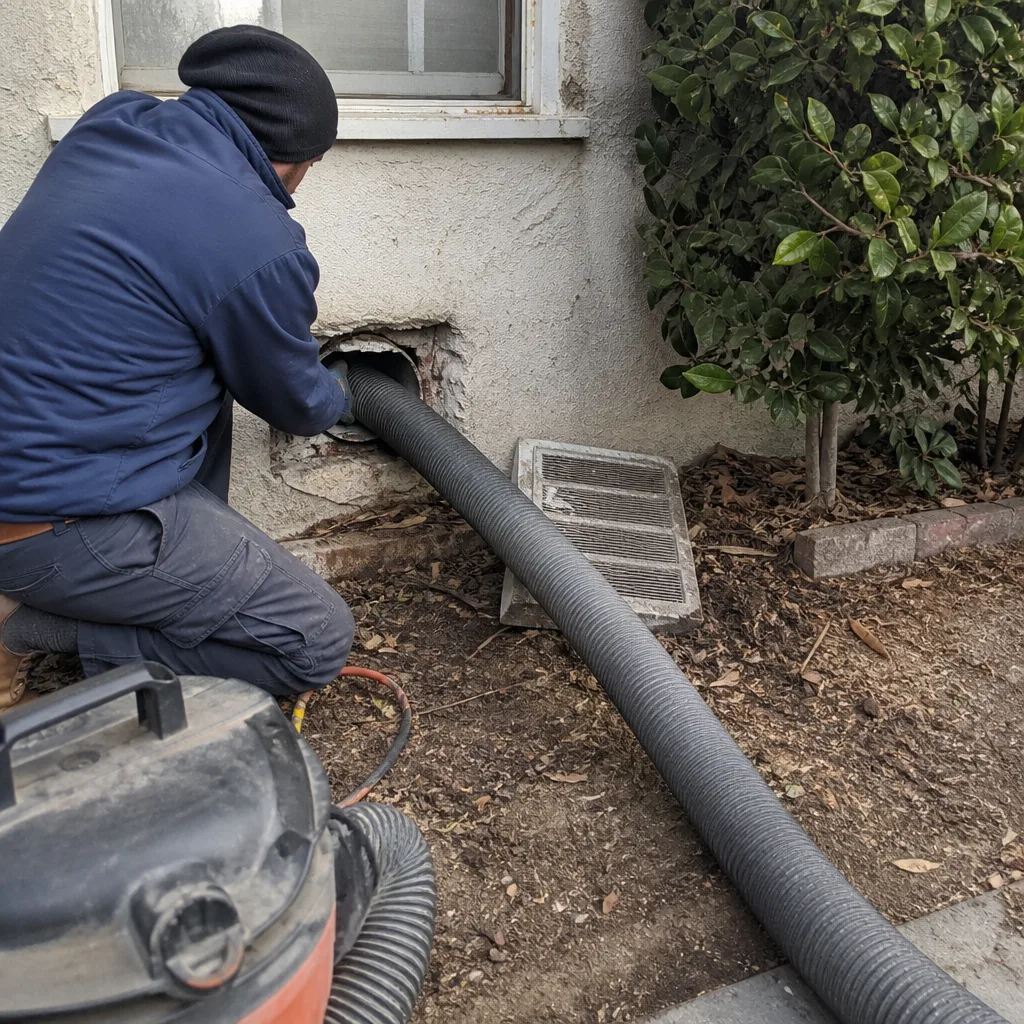 Before
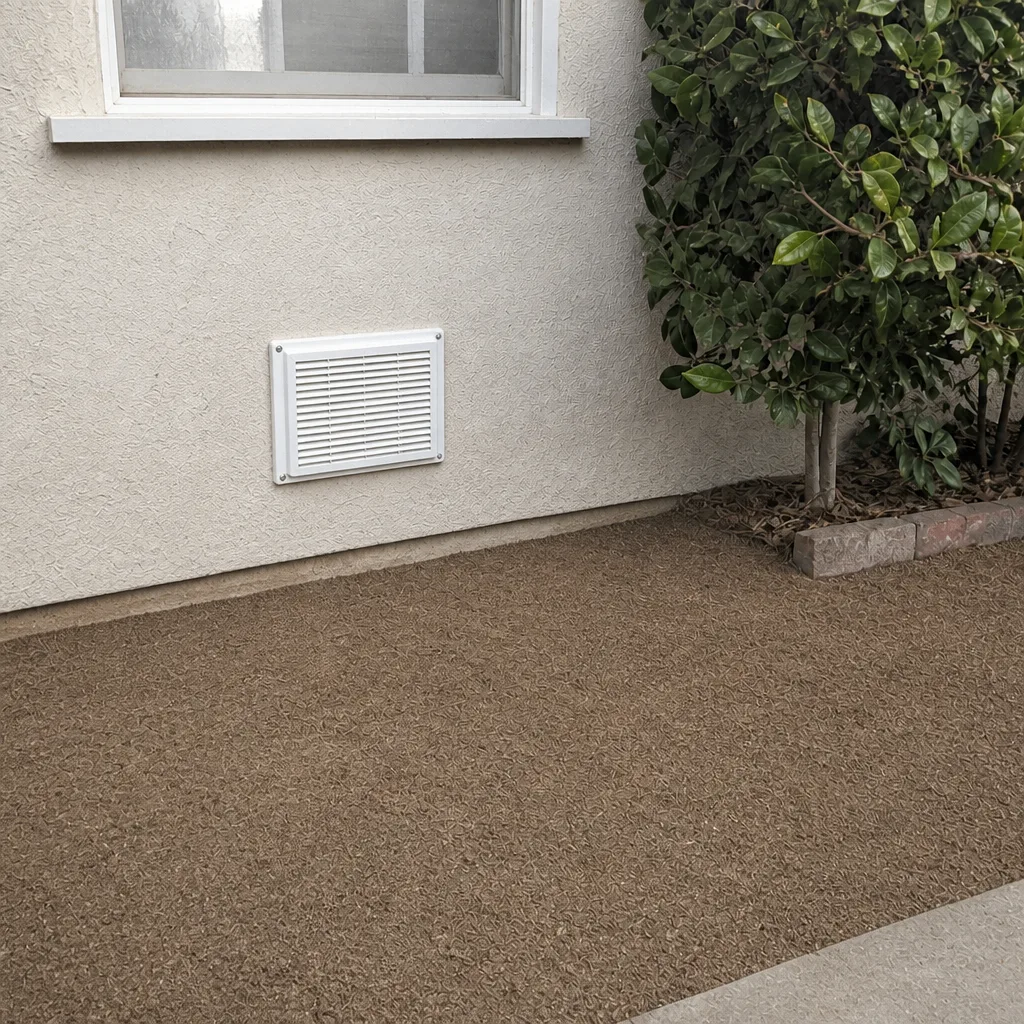 After
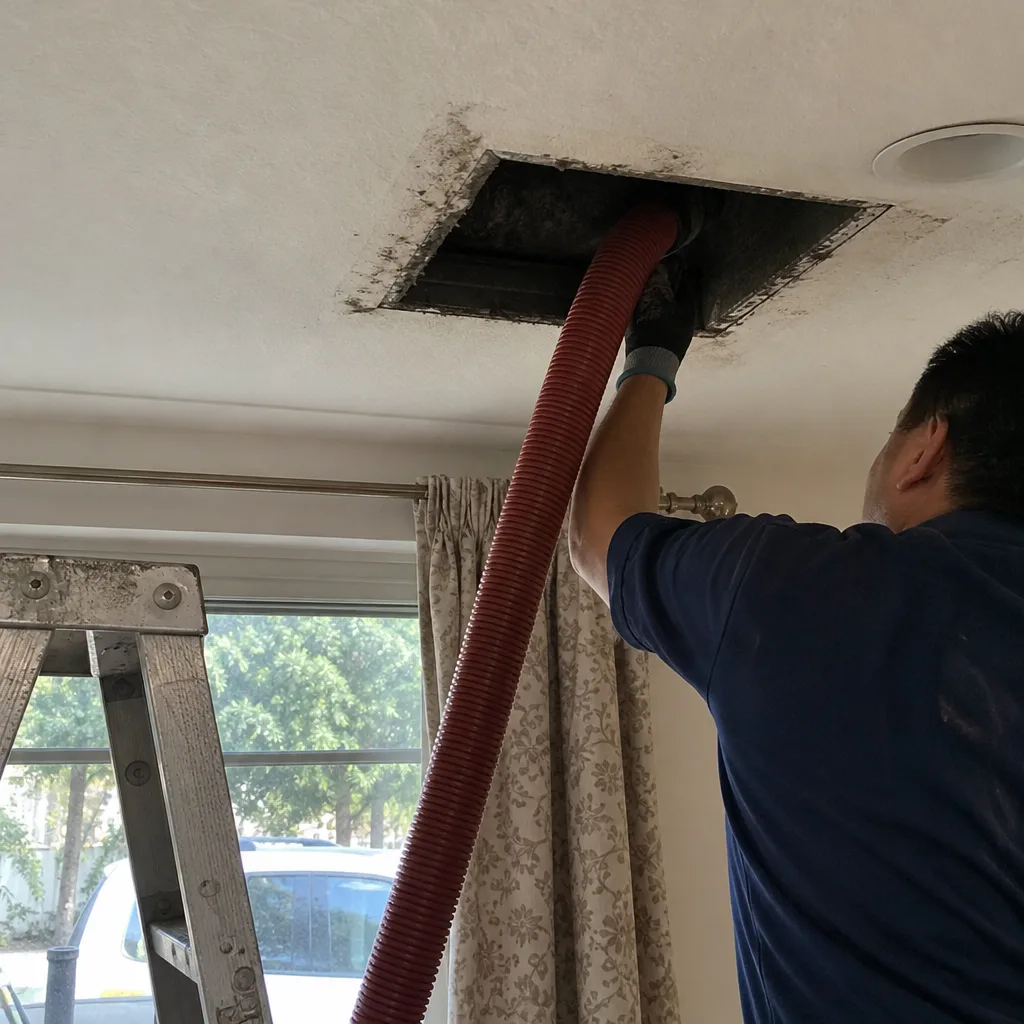 Before
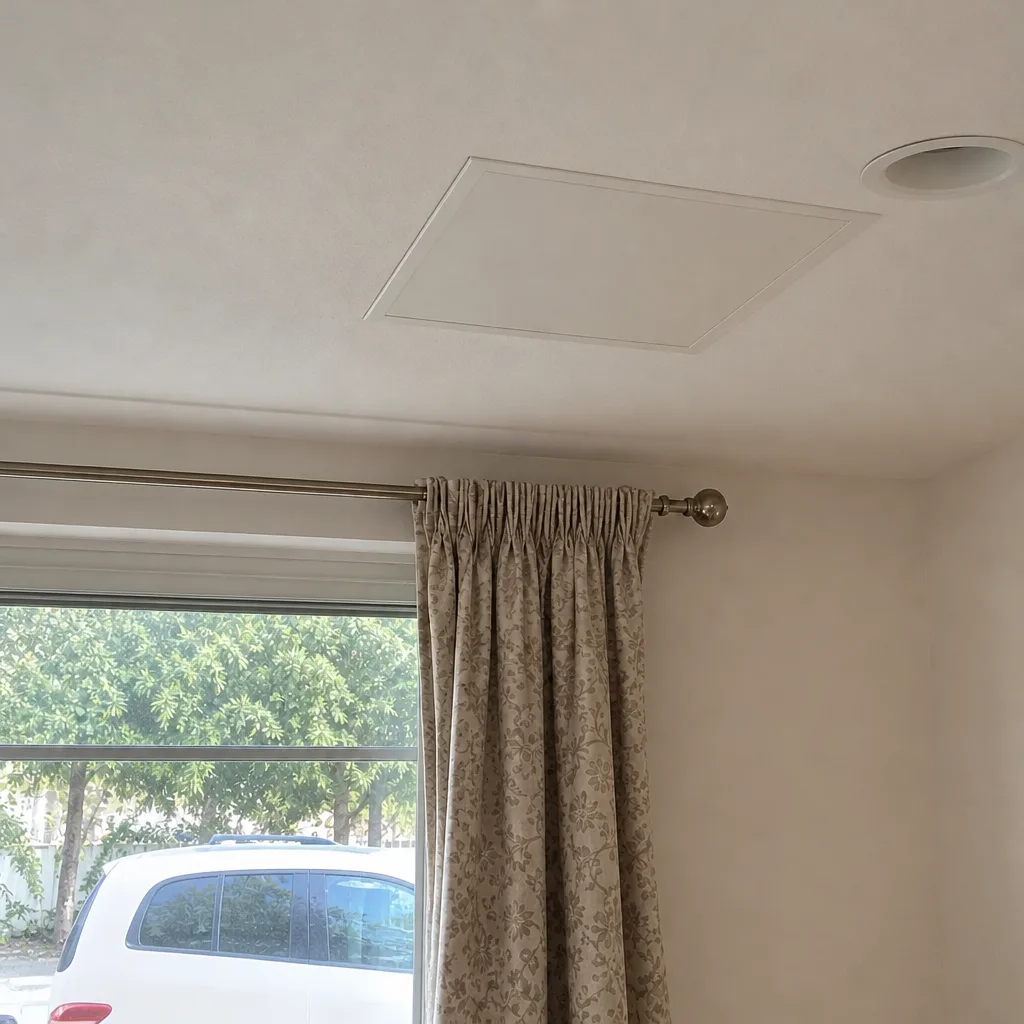 After
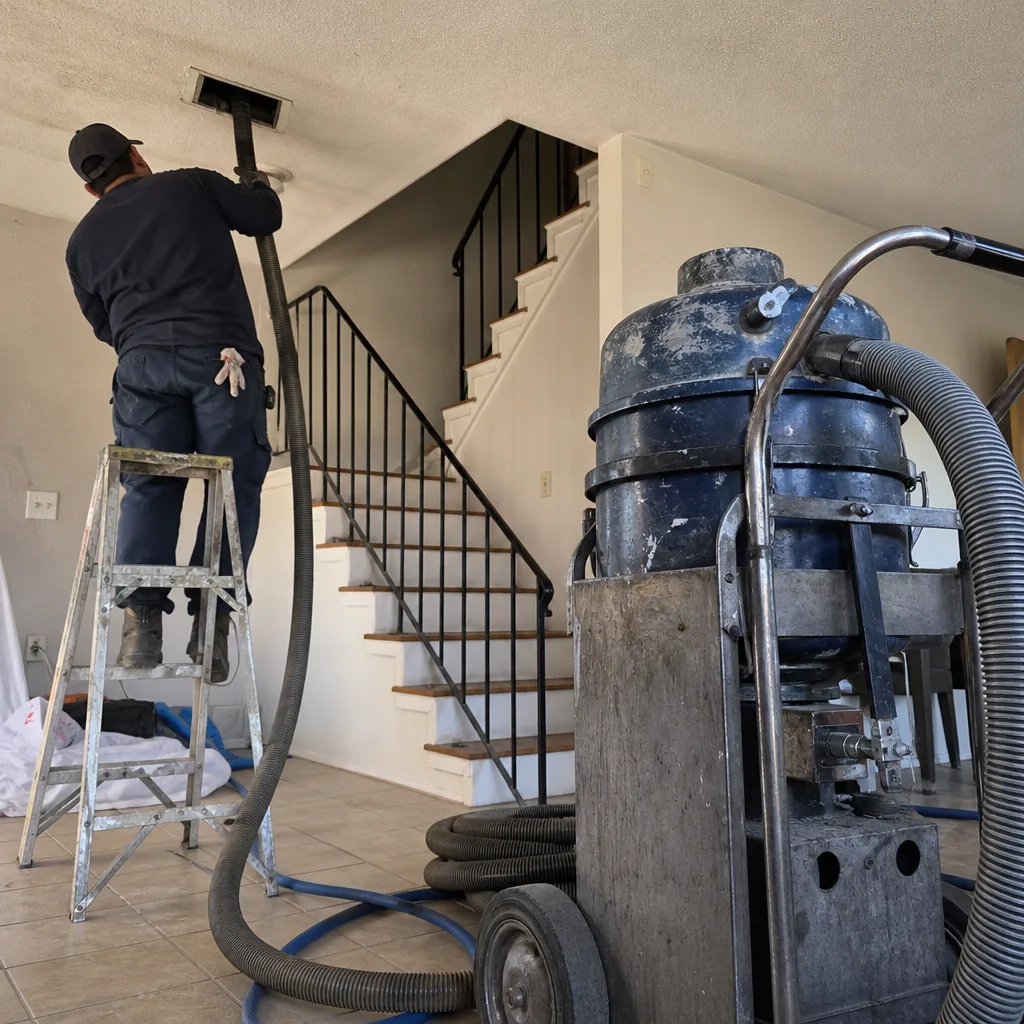 Before
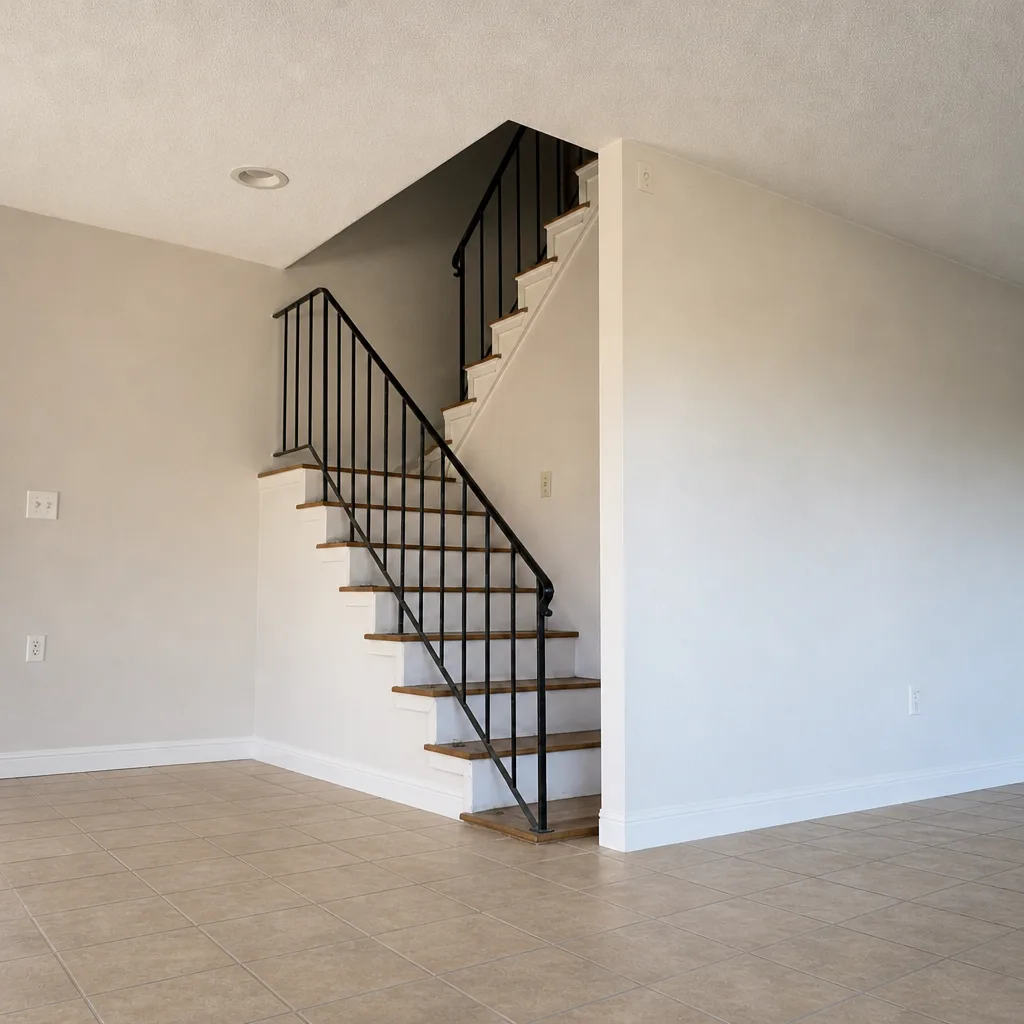 After
Frequently Asked Questions
The simplest test is unevenness. If some rooms get good airflow and others don’t, that’s a duct-side pattern; if the whole house loses airflow at once, that points to the equipment. Run the tissue test at several registers and compare, then check whether the supply air at the strong registers is genuinely cold. Uneven airflow plus normal equipment sound is a duct problem, and it’s worth an inspection before considering equipment replacement. Call (833) 545-4372 for a free estimate.
Only if that room’s airflow problem is debris or a blocked run. If the run is disconnected or leaking, cleaning alone won’t solve it because cleaning removes what’s inside the duct; it doesn’t reconnect or seal the outside. The right next step is an inspection that distinguishes the two, followed by cleaning combined with repair and sealing where needed. Call (833) 545-4372 for a free estimate.
Musty air from the vents indicates moisture somewhere in the duct or coil area, or biological growth on duct surfaces. In Placentia’s dry climate, the moisture usually traces to an open duct leak drawing attic air into the return, or to condensate from the indoor coil. Cleaning plus sanitizing addresses what’s on the surfaces; the moisture source has to be sealed to stop it returning. Call (833) 545-4372 for a free estimate.
There’s no fixed interval that fits every home, but the general guidance is every few years for a typical house, sooner after a renovation or if anyone in the household has allergies that flare indoors. Homes with visible dust loading at the registers, a recent remodel, or a new-to-you house are the usual candidates for an earlier cleaning. If you’re unsure, a free estimate will tell you whether your system is due. Call (833) 545-4372.
A much cheaper quote usually reflects a much smaller scope: one pass with a shop-vac-level machine, no repair, no sealing, and often no photos. Per-vent pricing anchors the number low and then grows once the technician is on site. A whole-system quote from reputable companies prices the entire system and locks the number before work starts. If a quote seems far below the others, ask what equipment is being used and whether repair and sealing are included. Call (833) 545-4372 for a free estimate.
Ask for before-and-after photos of your own ducts. A professional job produces visible evidence: the interior surfaces before cleaning and after. When a technician finishes and hands you the photos, you can see exactly what changed. Rotobrush and Nikro equipment used correctly leaves that kind of verifiable result. Call (833) 545-4372 for a free estimate.
The Bottom Line
Most air duct complaints aren’t HVAC failures; they’re duct-system failures showing up as airflow problems, temperature gaps, or odors. The path forward is diagnostic: run the tissue and temperature checks at the registers, note which rooms fail, decode the smell, and walk your accessible ductwork for the five common failure points. That short set of facts tells you whether cleaning alone will resolve the symptom or whether repair and sealing are needed on top of it. When you’re ready, call Placentia Air Duct Cleaning Co at (833) 545-4372 for a free estimate. We answer 24/7. Fast dispatch from 7am to 7pm, Sunday through Friday. Better air starts with what you can’t see, and the whole system is where the answer lives, from cleaning to sanitizing to sealing, one call covers it all.
Written by the team at Placentia Air Duct Cleaning Co.