
Last updated November 20, 2026
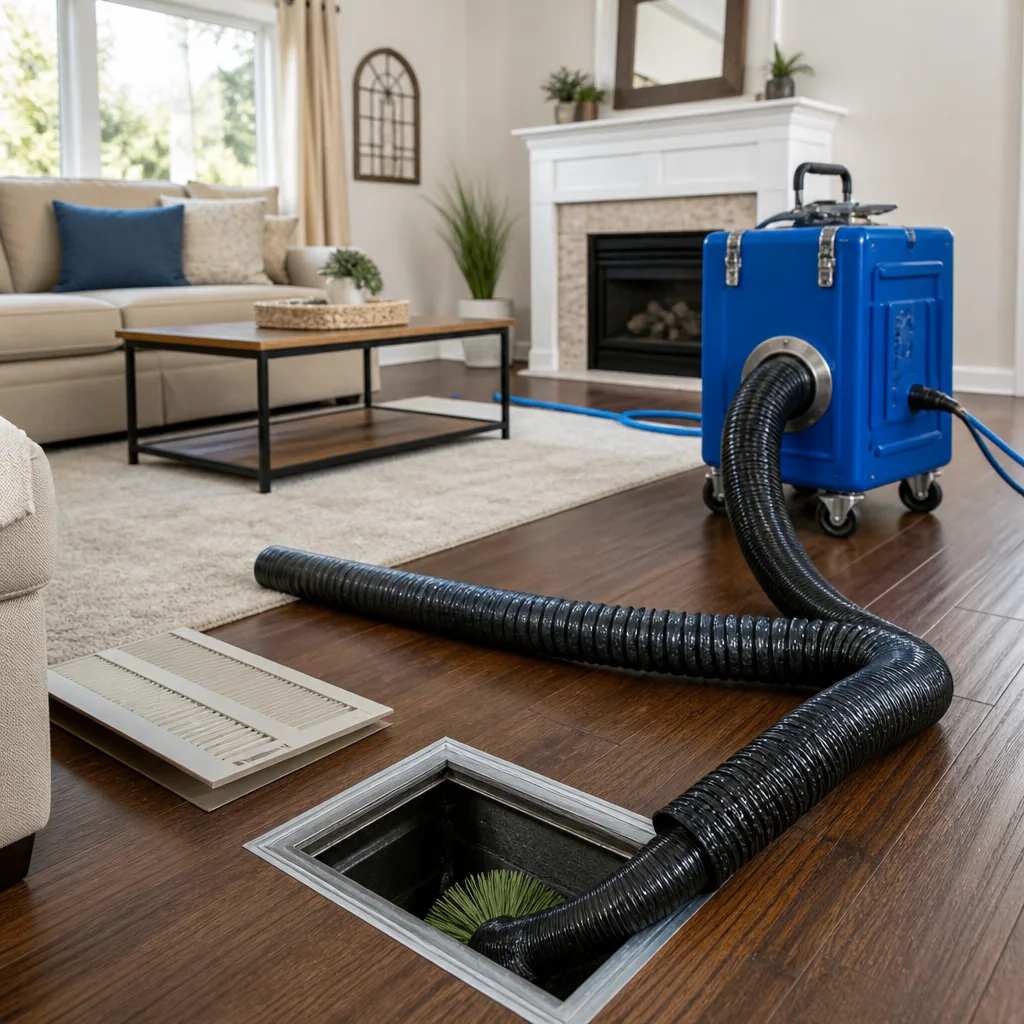 Whole-home duct cleaning
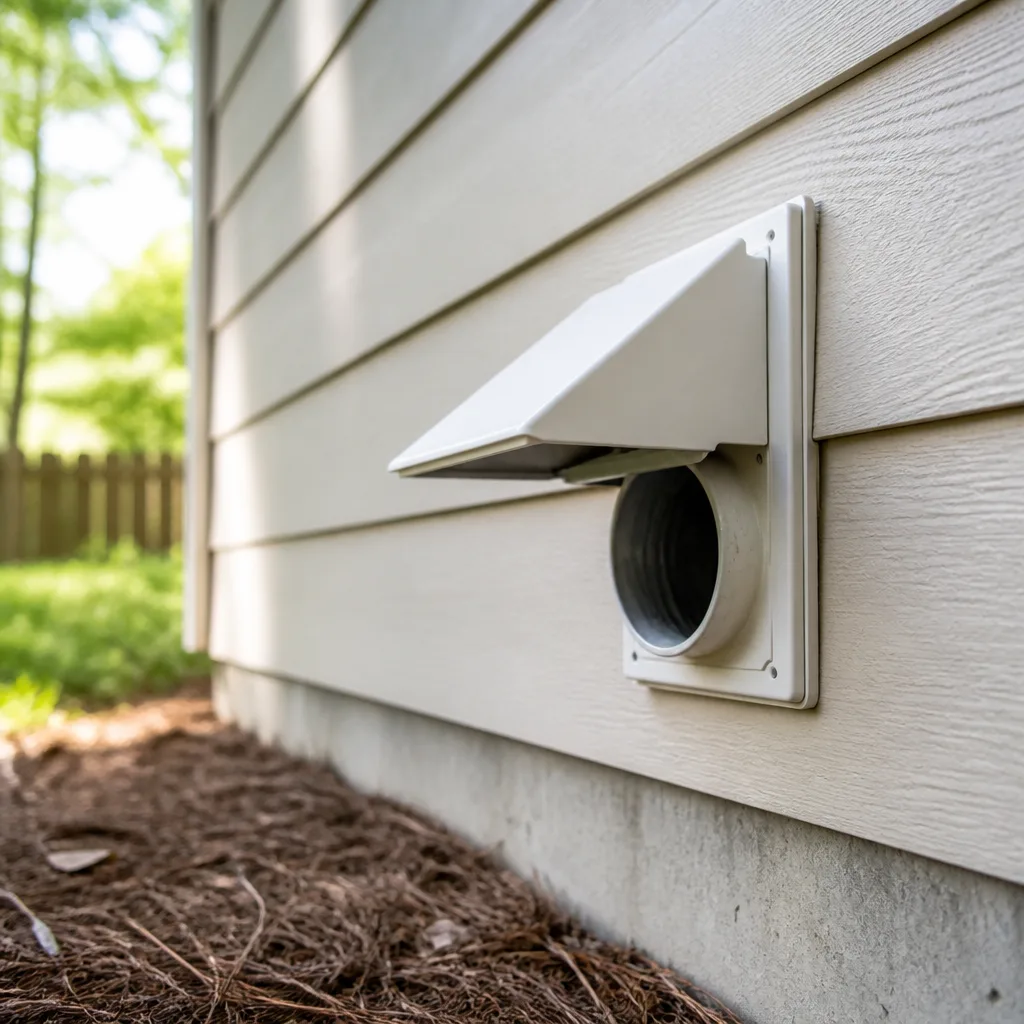 Dryer vent cleaning
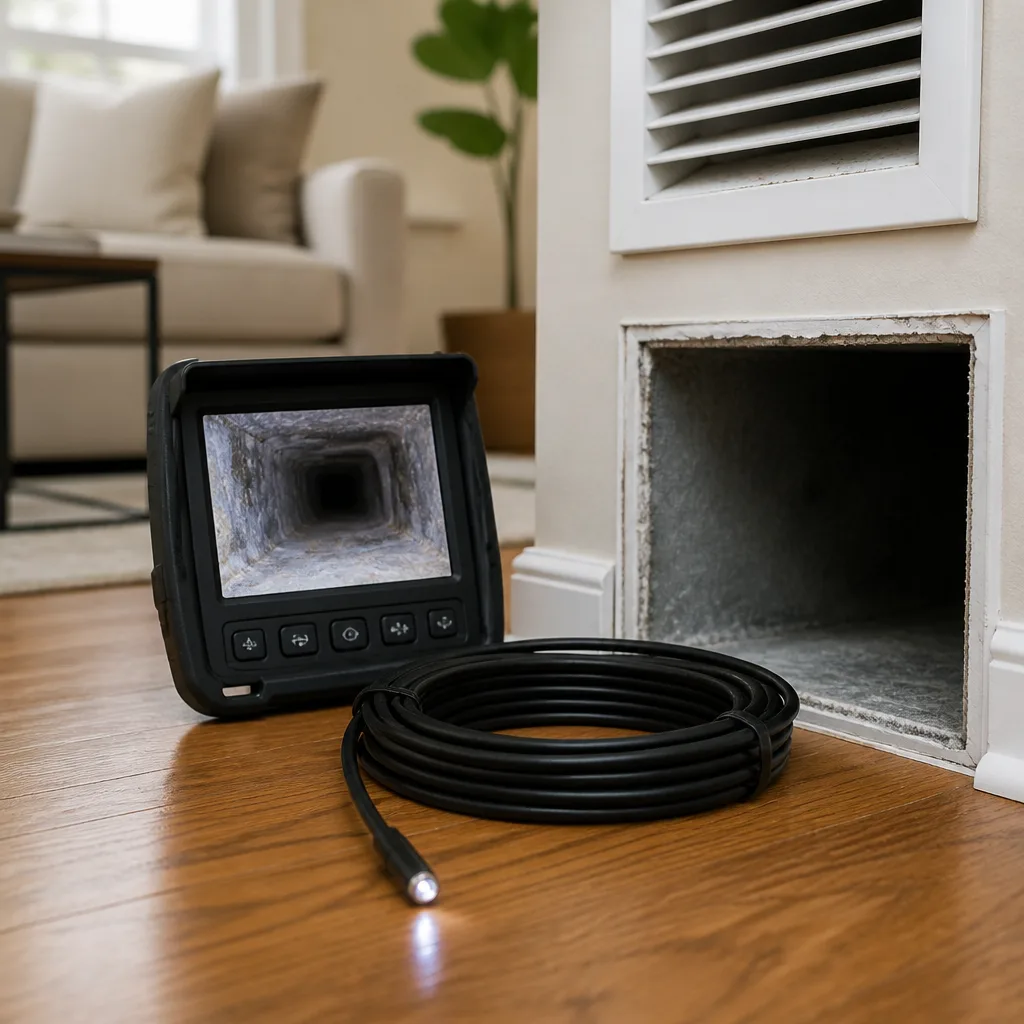 Camera inspection
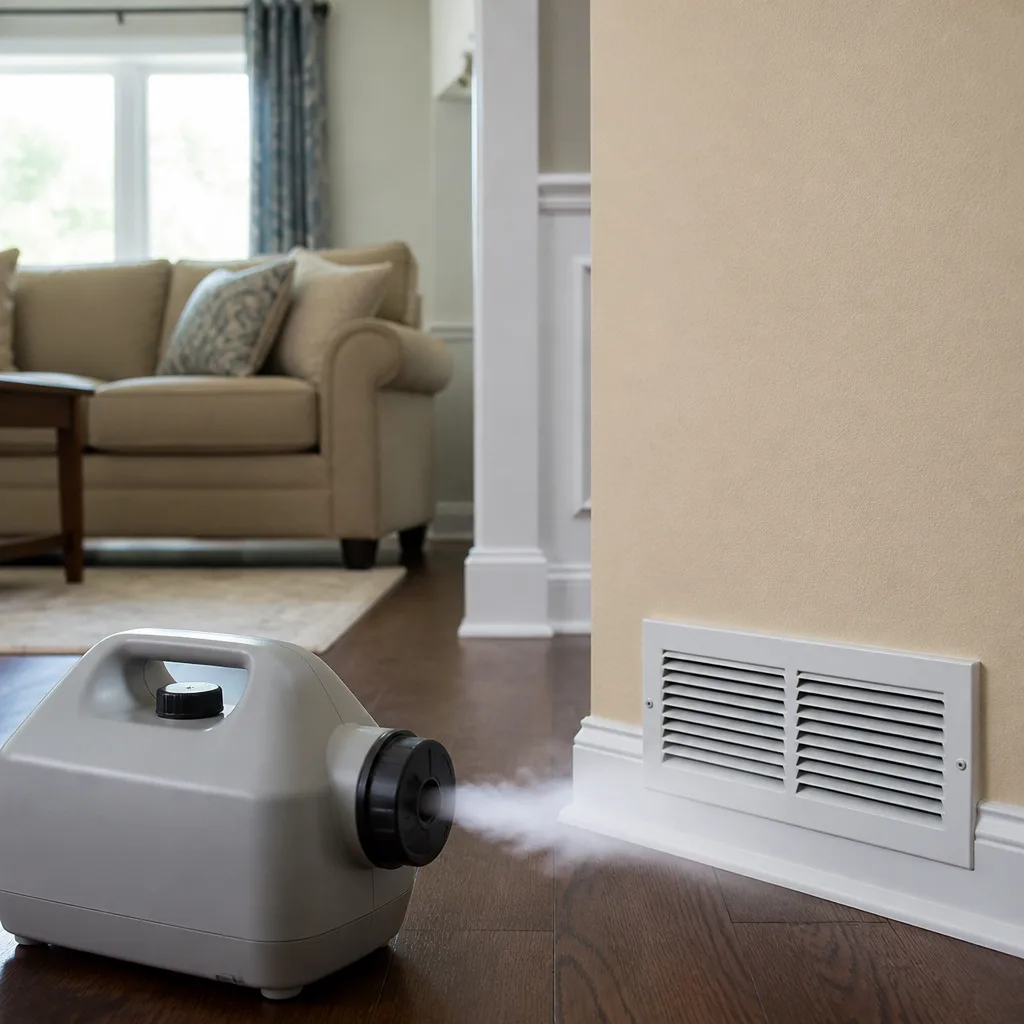 Sanitizing & deodorizing
Whole-system duct and dryer vent check with before-and-after photos - you see exactly what came out of your vents
That "$99 whole-house special" is a bait ad - the real number appears once they are in your hallway, or the "clean" is a shop-vac at the register. We photograph the inside of your ducts before and after instead.
Seasonal Air Duct Cleaning Care for Placentia: Year-Round Homeowner’s Guide
Most air duct cleaning advice is built for a place with four real seasons. Placentia doesn’t have them. Here, the air conditioner runs in February and the furnace kicks on in June, which means the contaminants moving through your ductwork never get a quiet season to sit still. They accumulate continuously, quarter after quarter, event after event. A single annual cleaning scheduled in the fall, the way a national checklist might suggest, misses the moments when Placentia homes actually need attention: Santa Ana wind days, Orange County wildfire smoke events, and the spring allergy load that arrives before cooling season. This guide walks the full year in Placentia, explains what each season pushes into your system, and shows what to check and when to call.
Quick Answer
Seasonal air duct cleaning in Placentia follows four phases rather than one annual appointment: fall preparation for Santa Ana winds, winter checks at heating startup, spring sanitizing before cooling season, and summer mid-season filter and airflow checks. Because Placentia runs HVAC nearly year-round, contaminants accumulate without a dormant break, so timing work to these events matters more than picking a random month.
Styles & brands we work with
- Whole-home duct cleaning
- Dryer vent cleaning
- Camera inspection
- Sanitizing & deodorizing
Table of Contents
- Why Year-Round HVAC Changes the Duct Cleaning Calendar
- Fall: Santa Ana Wind Season and Pre-Season Infiltration
- Winter: Heating Startup and What Settled Debris Does
- Spring: Allergies, Biofilm, and the Sanitizing Window
- Summer: Peak Cooling Load on a Contaminated System
- Wildfire Smoke Events: Why a Filter Change Isn’t Recovery
- The Placentia Four-Phase Checklist
- Common Mistakes to Avoid
- When to Call a Professional
- Frequently Asked Questions
Why Year-Round HVAC Changes the Duct Cleaning Calendar
The central fact about indoor air in Placentia is that the system almost never stops. Cooling season blends into heating season with no long stretch where the air handler sits idle. In colder climates, dust settles in the ducts during months when the system is off, and a cleaning in early fall catches it all at once. Here, the fan keeps moving air, and whatever the air carries keeps depositing on duct walls, turning vanes, and the coil.
That changes how you should think about maintenance. It’s not about a single deep clean; it’s about matching work to what the season is putting into the system. Three local forces drive that calendar:
- Wind events. Santa Ana winds push dry, dust-laden air against the building envelope, and every small gap in the return side becomes a delivery path.
- Smoke events. Orange County wildfire smoke arrives in pulses. Each pulse leaves fine particulate that ordinary filtration doesn’t fully capture.
- Continuous runtime. Because the system runs year-round, contamination compounds instead of resetting. A duct that was clean last spring has been working every day since.
In our experience, Placentia homes that schedule by event (before wind season, before cooling season) end up with cleaner systems than homes that simply pick a date each year. The work is the same; the timing is what differs. If you want the foundational service itself explained, our air duct cleaning page covers the full process, and our main page at Placentia Air Duct Cleaning Co lays out the five services we run.
One more point on why whole-system matters: the supply vents you see in a room are a small fraction of the ductwork. The return trunk, the plenum above the air handler, and the coil are where most contamination lives. Cleaning only the visible vents leaves the bulk of the problem in place. That’s why every phase below targets the full air pathway, not just the grilles.
Fall: Santa Ana Wind Season and Pre-Season Infiltration
Fall is the highest-risk period for duct contamination in Placentia, and it has nothing to do with cold. Santa Ana winds bring dry, fast-moving air off the interior, carrying fine dust that finds every seam in the building. Duct systems are not airtight. A return-side leak in a garage, attic, or interior wall cavity pulls that dusty air straight into the air stream and deposits it downstream.
The right fall action is pre-season, done before the strongest wind events arrive:
- Inspect and seal accessible duct seams. Duct repair and sealing on the return side cuts the path that outside dust uses to get in. This is the single most protective fall step for a Placentia home.
- Clean the system before the season, not after. Cleaning removes the settled load so the system starts the wind season with less material to re-suspend.
- Check return-side filtration. A filter that’s already loaded can’t do its job. Replace it as part of fall prep.
- Look for gap sources. Attic hatches, garage penetrations, and older flex duct with worn connections are common culprits in Placentia’s housing stock.
Why timing matters: once the wind season is underway, sealing work fights an active dust load. Do it in advance and the system stays cleaner through the whole run. If the ducts have never been assessed for leaks, fall is the honest time to find out. Duct repair and sealing in Placentia belongs in this window because compromised ductwork pulls wind-borne dust in all season.
What we look for on a fall visit is straightforward: loose flex connections, disconnected takeoffs, and unsealed joints at the plenum. Any of those means the system is breathing outside air it shouldn’t. We repair and seal on the same visit so the work isn’t left as a to-do list. Professional-grade equipment, not shop vacuums, is the standard: Rotobrush and Nikro systems are purpose-built for duct interiors, and sealing tools go with them on the same trip.
What to Check Before Wind Season
- Filters freshly replaced and correctly sized.
- Return-side seams and flex connections sealed.
- Duct interior cleaned so there’s less to re-suspend.
- Grilles and registers free of visible dust build-up.
Our HVAC cleaning service covers the coil, plenum, and air handler alongside the ducts, which matters because fall dust doesn’t stay in the ducts; it coats the coil too.
Winter: Heating Startup and What Settled Debris Does
Winter in Placentia is mild, and that’s exactly the problem. Because the furnace runs so little, debris settles in the ducts during the weeks when heating demand is low. When a cold morning finally fires the system, the blower moves that settled material all at once, and bedrooms, living rooms, and hallways get a visible dust load in a single run.
The fix is a heating-startup check, ideally done before the first real heating demand:
- Clean before startup. Removing settled debris means the first heating run doesn’t launch it into the rooms.
- Check the coil and blower. A pre-season coil check reveals how much material has deposited on the coil faces and the blower wheel over the cooling season that just ended.
- Verify filter condition. Replace loaded filters so the first heating cycle pushes clean air.
- Look at the air handler. Any visible dust on the blower or cabinet is a sign the ducts are feeding it.
In winter, the heating side usually runs lightly while the cooling side is quiet. That light runtime means less air movement, which means more settling. A cleaning done in late fall sets you up for a cleaner winter; a cleaning done mid-winter clears what has already settled. Either works, as long as you’re not leaving a season’s worth of debris to be launched on the next cold morning.
One detail we watch for on winter visits: coil condition tells you how the whole system has been breathing. A heavily fouled coil points to a duct system that’s been moving dirty air for months. Cleaning the coil and the ducts together makes sense because they contaminate each other. Cleaning the system, not just the vents, is what winter prep actually requires.
Spring: Allergies, Biofilm, and the Sanitizing Window
Spring is the best window for sanitizing treatment in Placentia, and the reason is timing. Allergy season ramps up just as the system transitions from light heating into the early cooling season. Before you ask the system to run hard through summer, get the microbial load down.
Duct interiors in a home that has been running nonstop for a year can support biofilm growth, especially in humid parts of the return path or on a coil that’s been cycling condensate. That growth feeds allergens back into the air. A sanitizing treatment applied after cleaning is the step that knocks it down.
The order matters:
- Clean first. Sanitizing a dirty duct just coats the dirt. Cleaning removes the material, then sanitizing treats the surface.
- Apply a Guardsman-backed treatment. We use Guardsman treatments as part of the sanitizing process, applied post-cleaning for documented antimicrobial protection.
- Replace filters after treatment. Fresh filters keep the sanitized system clean as cooling season begins.
- Address any biofilm on the coil. A coil cleaning pairs naturally with spring sanitizing.
Why spring and not summer: once peak cooling arrives, you don’t want to interrupt the system for cleaning. Spring gives you a window to clean, sanitize, and verify airflow before the heavy load. For homes with allergy-sensitive occupants, this is the phase that matters most. Our air quality sanitizing work is built for exactly this moment in the annual cycle.
If you’ve been thinking about sanitizing but haven’t done it, spring is when the math works best: the system is about to be asked to carry a full summer load, and starting that load from a clean, treated system is the difference between fighting allergens all season and not thinking about them.
Summer: Peak Cooling Load on a Contaminated System
Summer in Placentia asks the most of the system, and it does so day after day. When a system is already carrying contamination into summer, the load compounds: the coil works harder, the blower runs longer, and airflow drops as the coil and ducts foul further.
Mid-season checks catch problems early, before they turn into a comfort complaint or a service call:
- Filter check. Swap the filter at the halfway point of the cooling season, not just at the start. A loaded filter strains the system all summer.
- Static pressure check. A technician can measure static pressure to see whether the system is breathing freely. High static pressure means restricted airflow, often from a fouled coil or clogged ducts.
- Coil inspection. A quick look at the coil can reveal how much contamination has built since spring. A coil that’s visibly fouled mid-season points to a duct system that needs attention.
- Airflow walk-through. Feel supply registers around the home. Weak airflow in distant rooms often signals a duct problem, not a thermostat problem.
A mid-season filter and static pressure check is the most cost-effective move in the summer phase because it catches contamination before it becomes a comfort failure. If the check turns up a fouled coil or restricted ducts, a cleaning addresses it. Doing this in July keeps August comfortable.
One thing to know about summer cleaning: because the system runs so continuously, the ducts accumulate faster in summer than at any other time. A duct that was clean in spring will have more material by August. That’s not a reason to clean monthly; it’s a reason to clean on a schedule tied to summer’s load and then let the system run.
Wildfire Smoke Events: Why a Filter Change Isn’t Recovery
Wildfire smoke events are increasingly common across Orange County, and they deserve their own phase because a filter change alone doesn’t solve the problem. Here’s why: smoke particles are fine enough that a standard filter catches some and lets the rest pass. The particles that pass deposit throughout the ductwork and on the coil. Once they’re in the system, changing the filter does nothing to remove them.
What full recovery involves after a smoke event:
- Assess the load. How much smoke reached the interior depends on how much the system ran and how leaky the return side is.
- Clean the ducts and coil. This is the step a filter change skips. The deposited particulate has to come out of the system.
- Seal the return side. If the ducts are pulling smoky outside air in, sealing closes the delivery path for the next event.
- Sanitize if warranted. Smoke deposits can support microbial growth in the right conditions; a Guardsman-backed treatment handles that.
- Replace filters. Finish with fresh filters so the recovered system starts clean.
The key principle: smoke is an event that deposits contamination, and recovery is a cleaning event, not a filter swap. Standard filter changes are insufficient recovery steps for a real smoke event because they don’t touch what’s already settled in the ducts or on the coil.
Abatement Technologies equipment on every job signals containment and negative-pressure practices consistent with professional indoor air quality standards. That’s the standard smoke recovery deserves: the contamination is contained and removed, not just pushed around. When a smoke event hits Placentia, this is the phase where putting off the work matters most, because the system keeps moving that deposited particulate every hour it runs.
The Placentia Four-Phase Checklist
Here’s the full year in one place, organized as actionable steps:
- Fall (before Santa Ana season). Clean the system, inspect and seal return-side seams, replace filters. Highest risk period for wind-borne dust infiltration.
- Winter (at heating startup). Clean before the first real heating demand, check the coil and blower, verify filters. Prevents launch of settled debris.
- Spring (before cooling season). Clean, then apply a Guardsman-backed sanitizing treatment, replace filters, address coil biofilm. Best window for allergy-season preparation.
- Summer (mid-season). Replace the filter mid-season, have a static pressure check, inspect the coil, walk the supply registers for airflow.
- After any wildfire smoke event. Assess the load, clean the ducts and coil, seal the return side, sanitize if warranted, replace filters. Do not treat a filter change as recovery.
That’s five steps across four seasons plus event triggers. If you only do one thing this year, do the fall prep, because Santa Ana season is the highest-risk contamination window in Placentia. If you want a single visit that covers cleaning, repair, sealing, and sanitizing, one call handles the cycle.
Common Mistakes to Avoid
- Treating duct cleaning as a once-a-year fall task. Placentia’s system runs year-round, so contamination compounds between cleanings. Schedule by season and event, not by habit.
- Skipping pre-season cleaning before Santa Ana winds. Waiting until after the wind season means the system spent the whole season pulling dust in and depositing it. Clean before the risk arrives.
- Changing the filter and calling it smoke recovery. A filter swap leaves deposited particulate in the ducts and on the coil. Real recovery is a cleaning event.
- Sanitizing before cleaning. Treatment over a layer of dirt doesn’t reach the surface. Clean first, then sanitize.
- Cleaning the vents and not the system. The visible grilles are a small fraction of the ductwork. Whole-system cleaning is the standard that matters.
- Ignoring a fouled coil. The coil is where a lot of the contamination lives. Cleaning ducts without cleaning the coil leaves the air stream fed by the same source.
- Leaving return-side leaks unsealed. A leaky return is the delivery path for wind-borne and smoke particulate. Sealing it is the protective step that keeps cleaning results.
When to Call a Professional
Some of this cycle you can do yourself: filter changes, grille checks, and airflow observations. The rest needs real equipment. Call a professional when a Santa Ana wind season is approaching and the ducts haven’t been assessed; when a wildfire smoke event has deposited visible particulate in the home; when airflow is weak in distant rooms and a filter change didn’t fix it; when you see loosened or disconnected flex duct; or when it’s been long enough that you can’t remember the last cleaning. Ducts are hard to reach and easy to damage with consumer machines. Rotobrush and Nikro systems are built for the interior of a duct, and repair and sealing belongs in the same visit. Placentia Air Duct Cleaning Co offers free estimates in Placentia, so call (833) 545-4372. We answer 24/7. Fast dispatch from 7am to 7pm, Sunday through Friday.
Frequently Asked Questions
In Placentia, duct cleaning is usually done on a four-phase schedule tied to seasons and events rather than once a year, because the system runs nearly year-round. In a typical home that means fall pre-season cleaning before Santa Ana winds, a winter startup check, a spring clean-and-sanitize before cooling season, and a mid-season filter and airflow check, with additional cleaning after any wildfire smoke event. Call (833) 545-4372 for an exact quote – estimates are free.
Yes. Fine smoke particulate passes a standard filter and deposits in the ductwork and on the coil, and changing the filter afterward doesn’t remove it. Full recovery means cleaning the ducts and coil, sealing any return-side leaks, sanitizing if warranted, and then replacing filters. Call (833) 545-4372 for an exact quote – estimates are free.
Santa Ana winds bring dry, dust-laden air, and return-side leaks let that air into the system, where it deposits on duct walls. Fall pre-season cleaning plus duct repair and sealing is the protective combination: clean first, then close the infiltration path before the wind season begins. Call (833) 545-4372 for an exact quote – estimates are free.
Spring is the best window because it comes before peak cooling load. Cleaning and applying a Guardsman-backed sanitizing treatment in spring means the system starts summer from a treated, clean state instead of carrying the microbial load into the heavy season. Call (833) 545-4372 for an exact quote – estimates are free.
Static pressure shows whether the system is moving air freely. High static pressure points to restricted airflow from a fouled coil or clogged ducts, which is exactly the kind of problem that builds up as Placentia’s system runs nonstop through summer. Catching it mid-season prevents a comfort failure later in the summer. Call (833) 545-4372 for an exact quote – estimates are free.
Yes. Cleaning, dryer vent work, HVAC system cleaning, duct repair and sealing, and air quality sanitizing are handled under one roof, which is why a single visit can cover the whole pathway. Our technicians have up to 11 years of experience, and we use Rotobrush, Nikro, and Abatement Technologies equipment so the work is done to a professional standard, not a consumer one. Call (833) 545-4372 for an exact quote – estimates are free.
See the difference
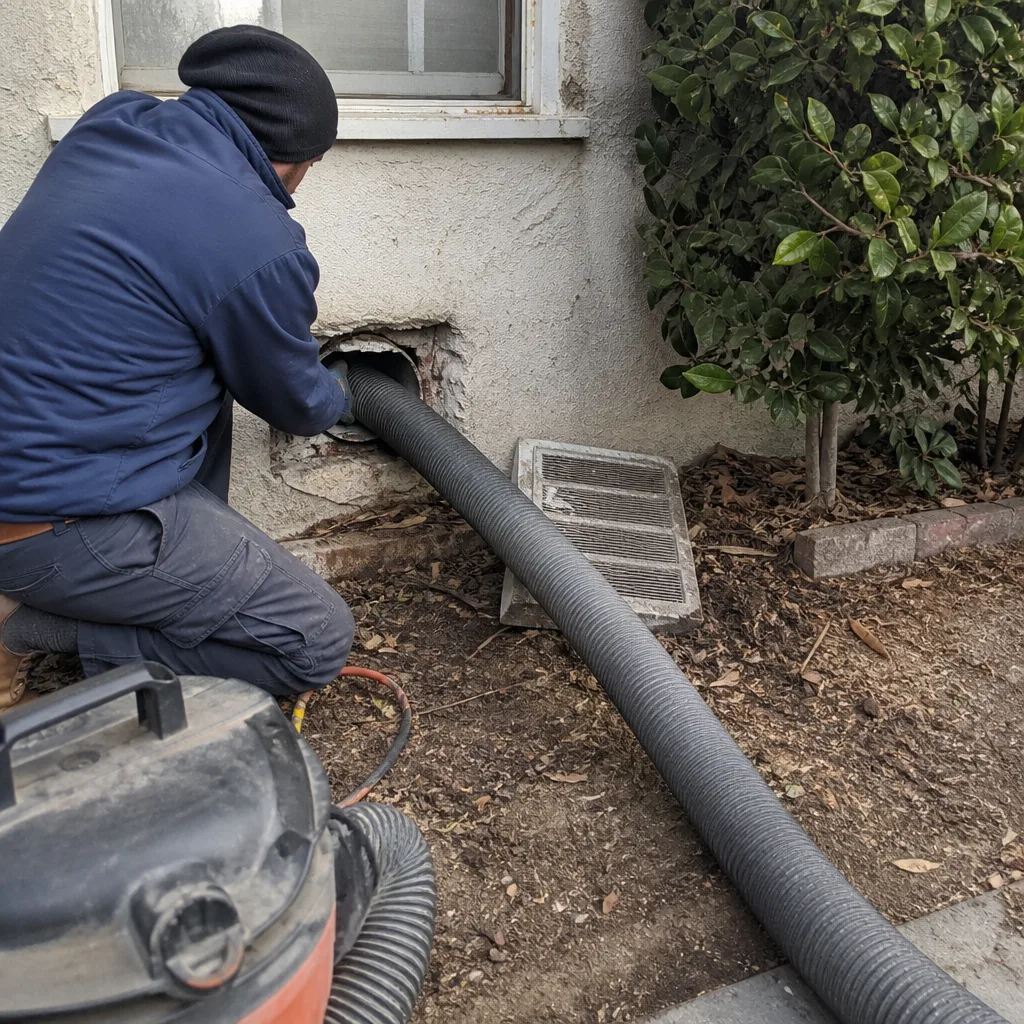 Before
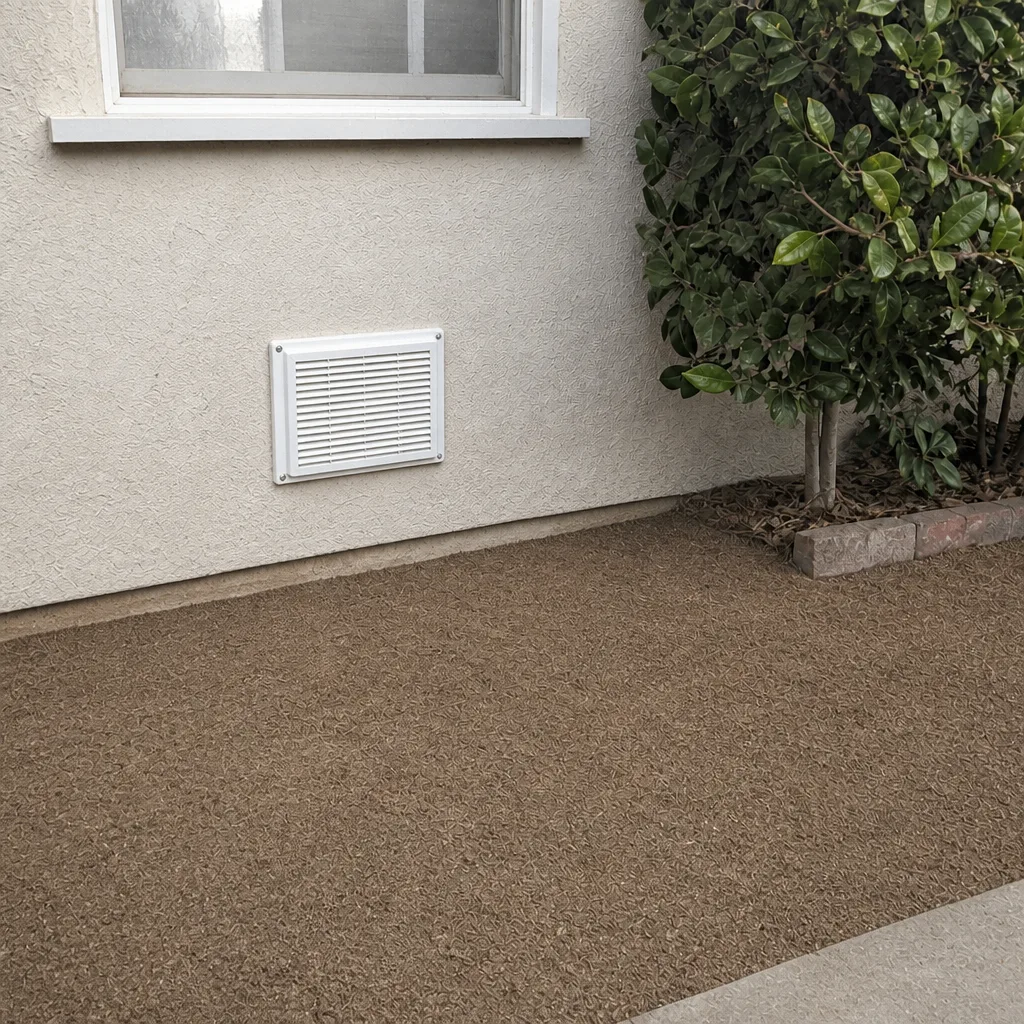 After
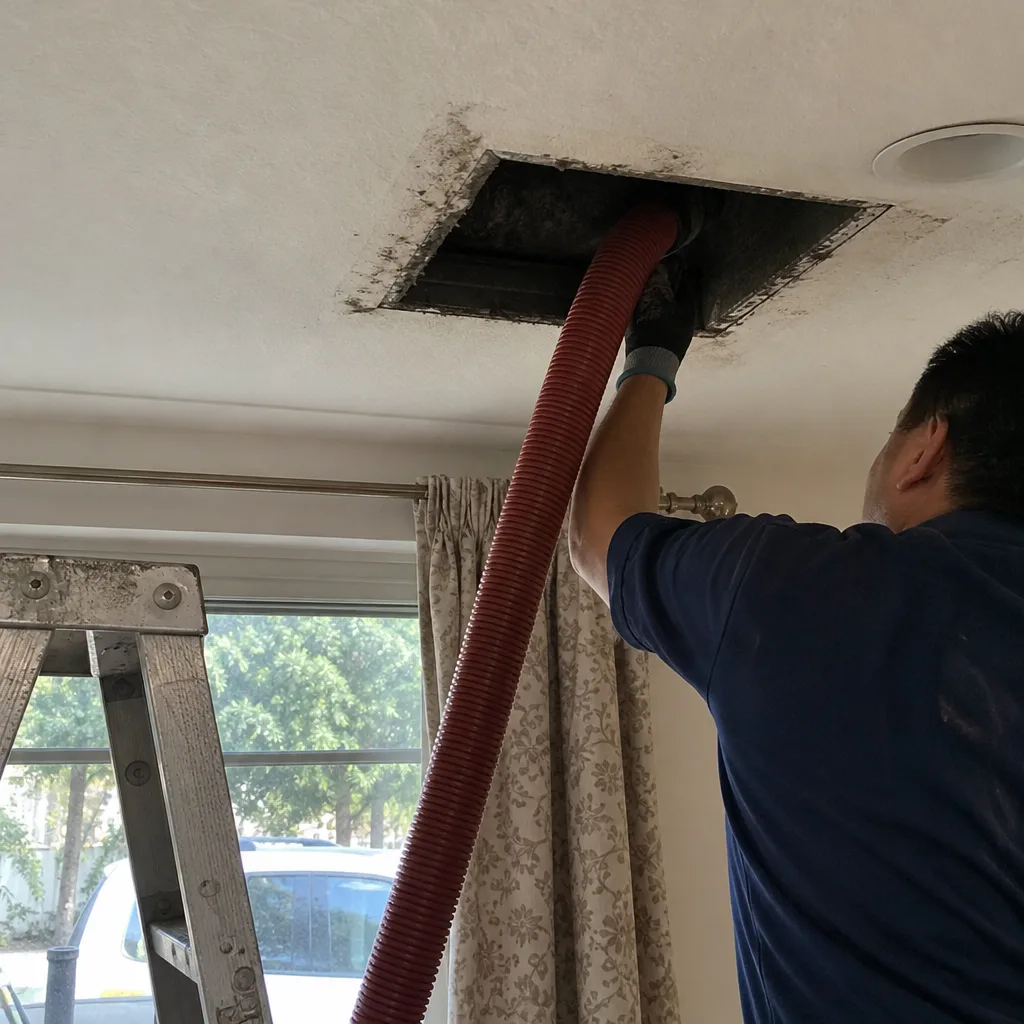 Before
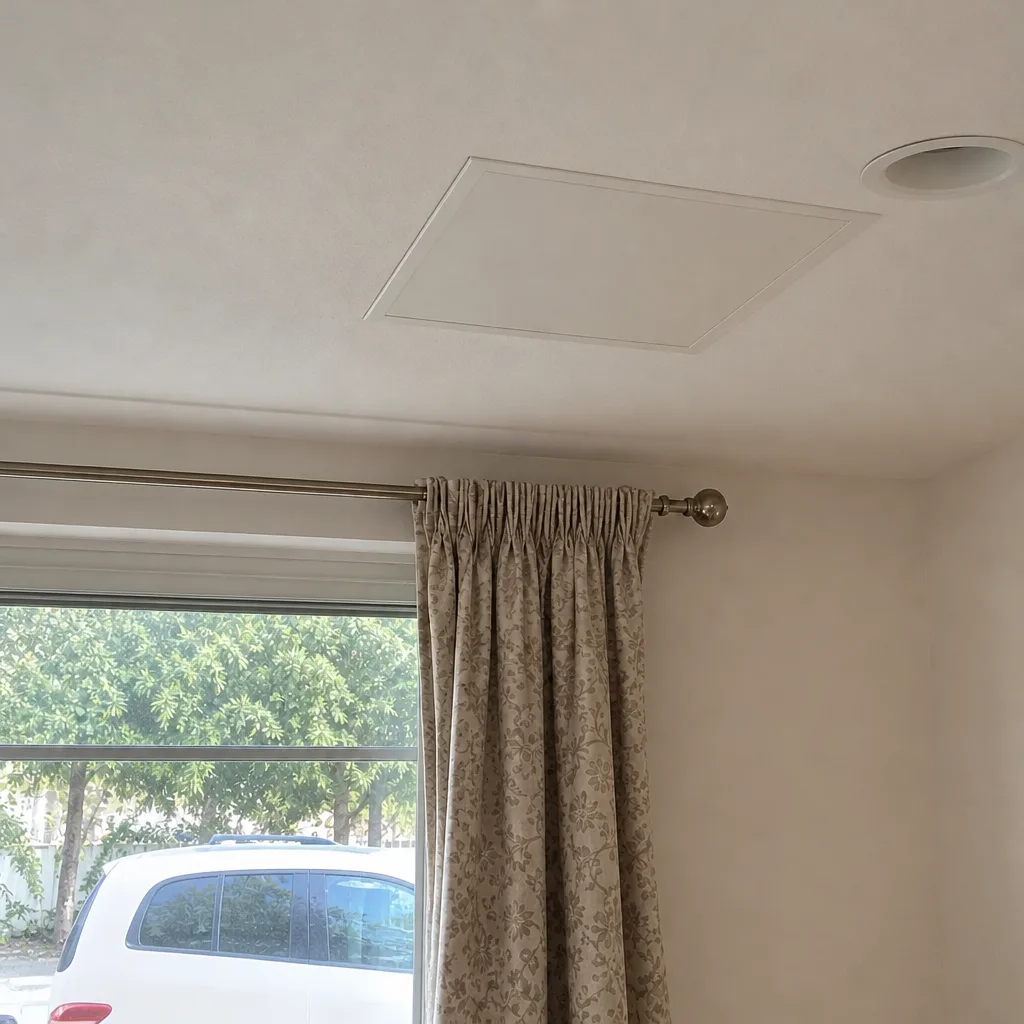 After
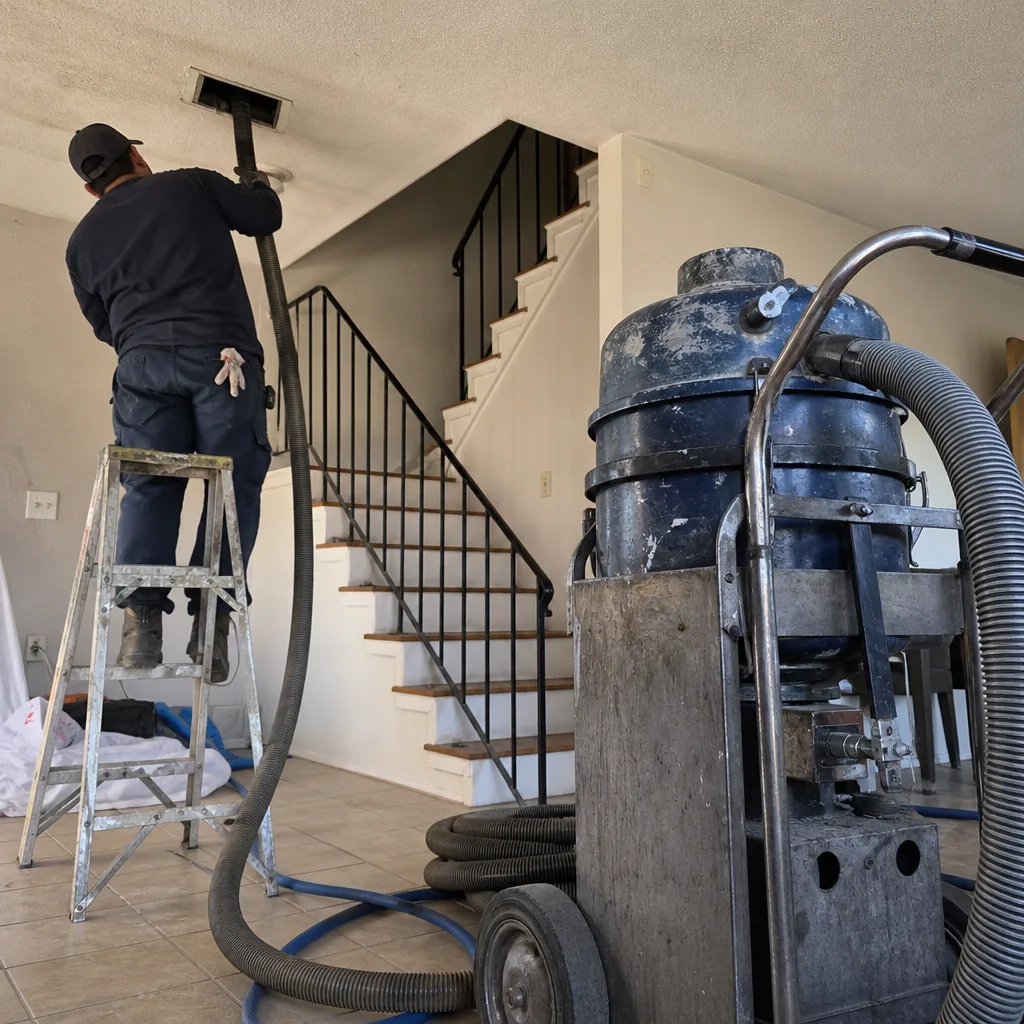 Before
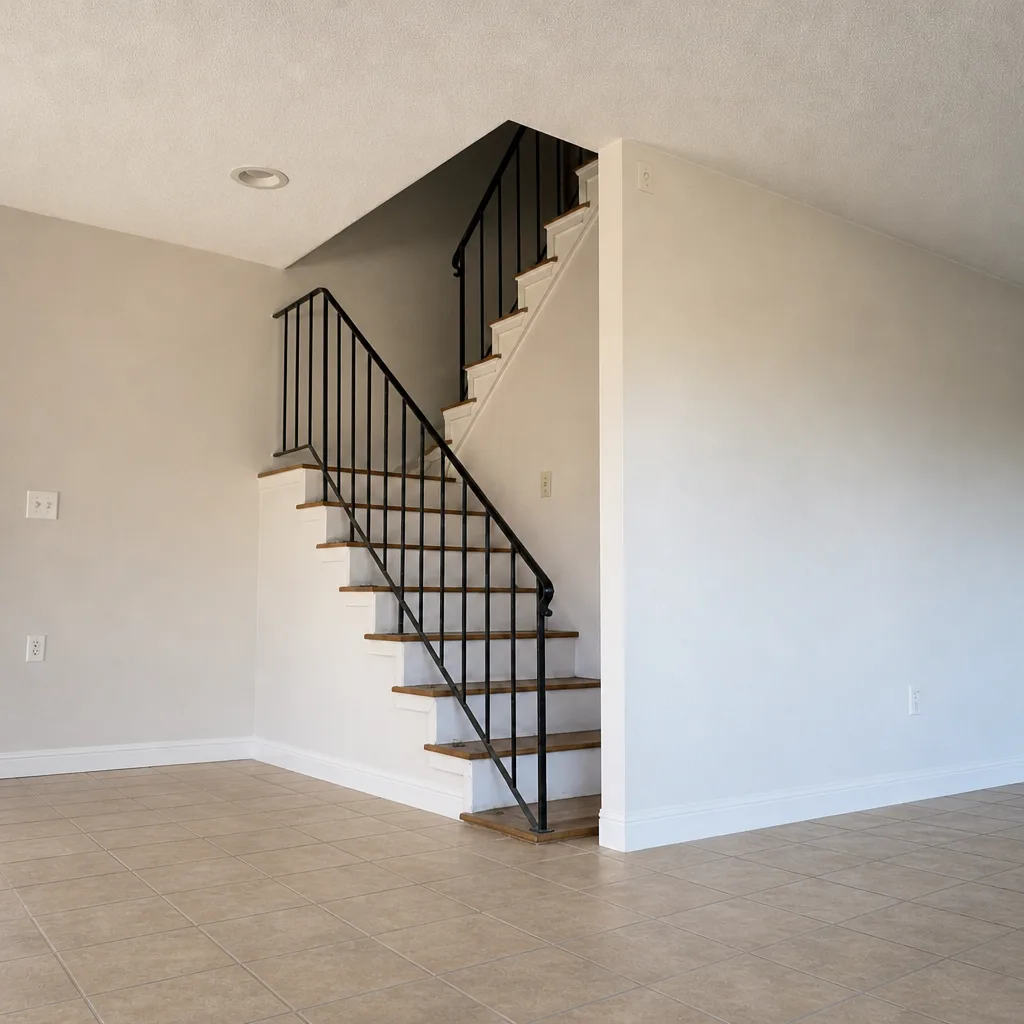 After
The Bottom Line
Duct care in Placentia is not a once-a-year appointment. It’s a four-phase cycle tied to Santa Ana wind season, heating startup, allergy season, and peak cooling load, with wildfire smoke events as an additional trigger. Fall protects against wind-borne infiltration. Winter catches settled debris at startup. Spring is the window for sanitizing before cooling. Summer is for mid-season airflow checks. Smoke events require real recovery, not a filter swap. Match the work to the season, seal what you find, and clean the whole system rather than the visible vents.
Contact
If you’re ready to put this guide into practice, we can help. Placentia Air Duct Cleaning Co provides air duct cleaning, dryer vent cleaning, HVAC system cleaning, duct repair and sealing, and air quality sanitizing across Placentia, and we supply and install Honeywell and Aprilaire air quality products alongside the cleaning work. We also handle dryer vent cleaning in the same visit when it’s due. Call (833) 545-4372 for a free estimate. We answer 24/7. Fast dispatch from 7am to 7pm, Sunday through Friday.
Written by the team at Placentia Air Duct Cleaning Co.