
Last updated November 20, 2026
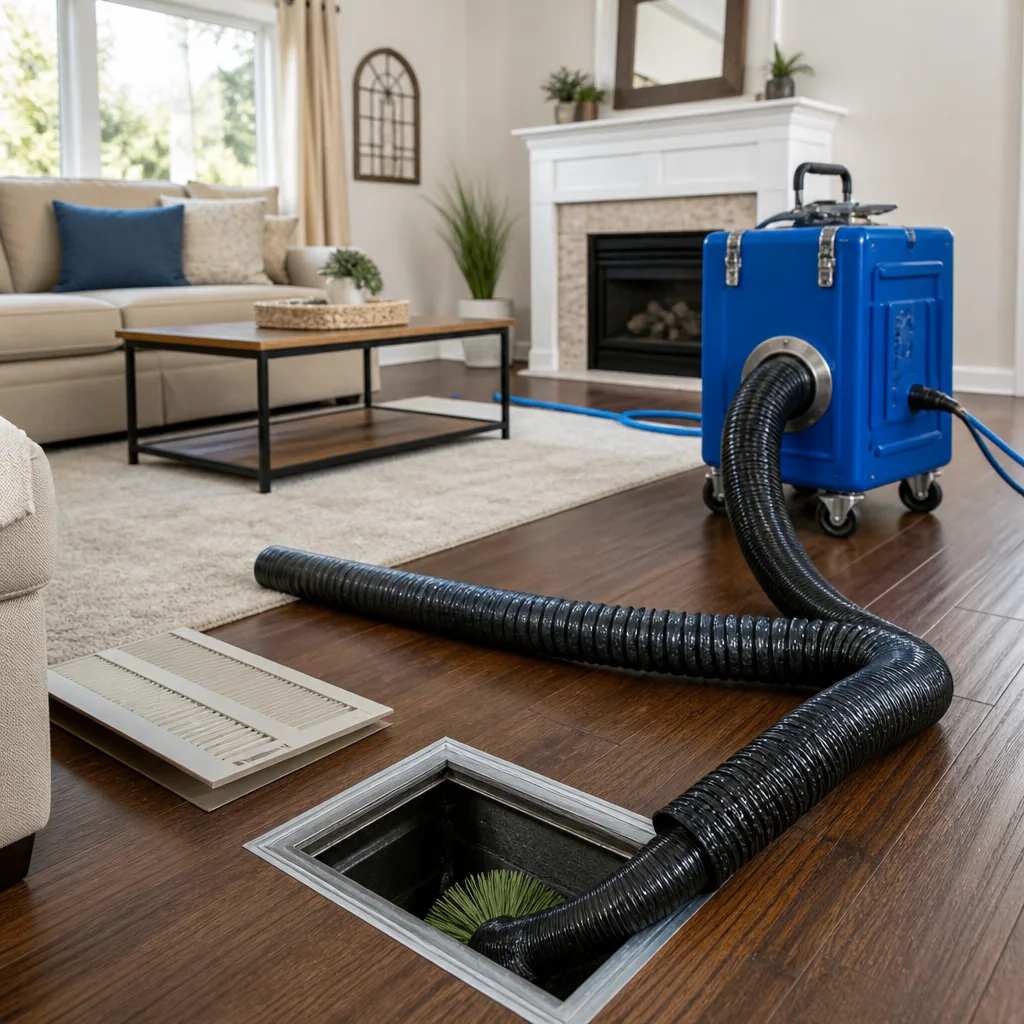 Whole-home duct cleaning
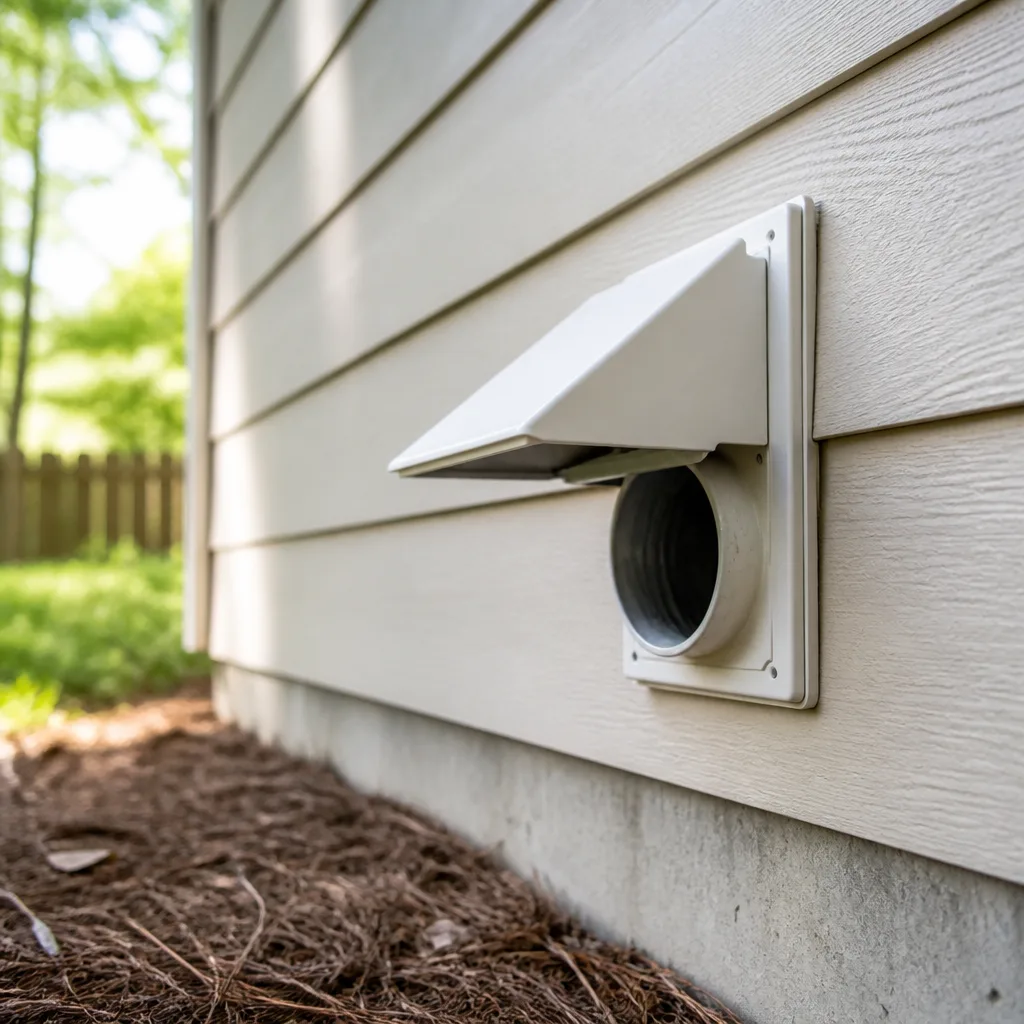 Dryer vent cleaning
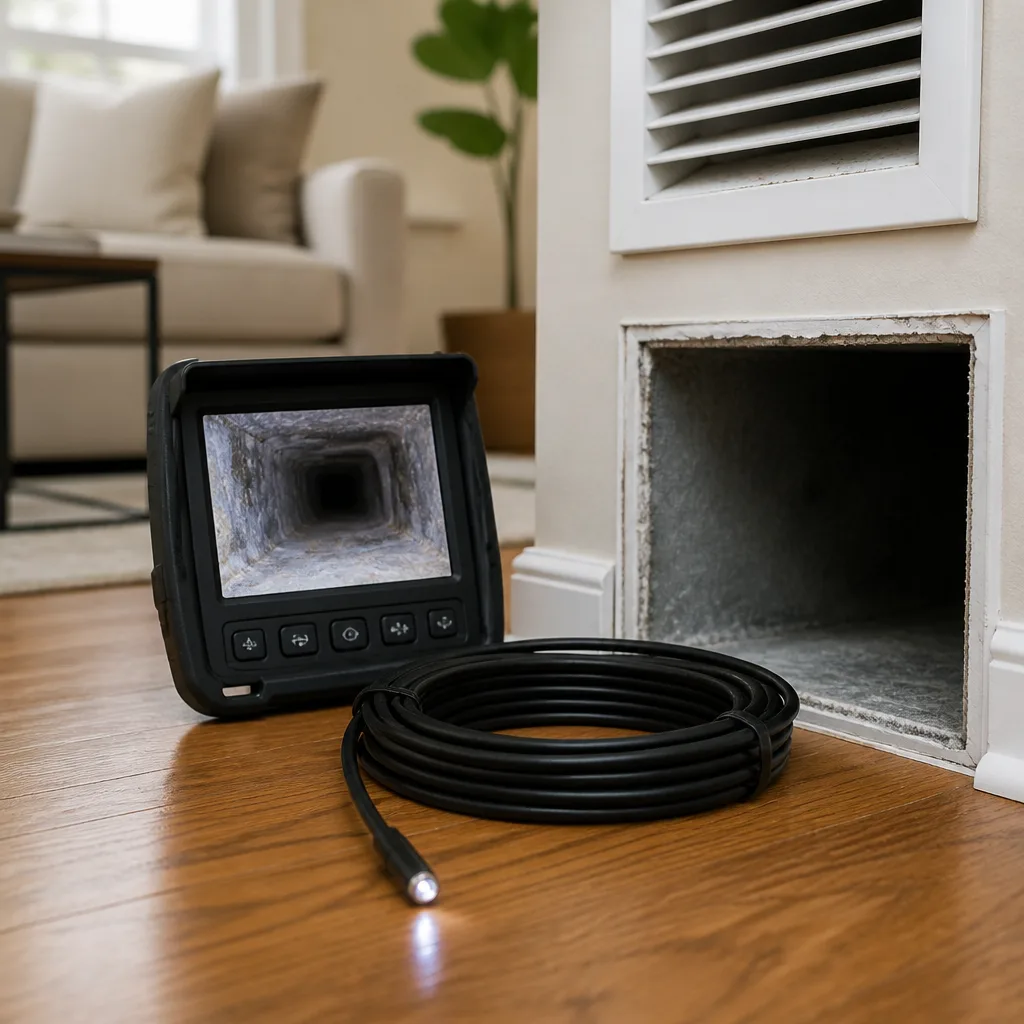 Camera inspection
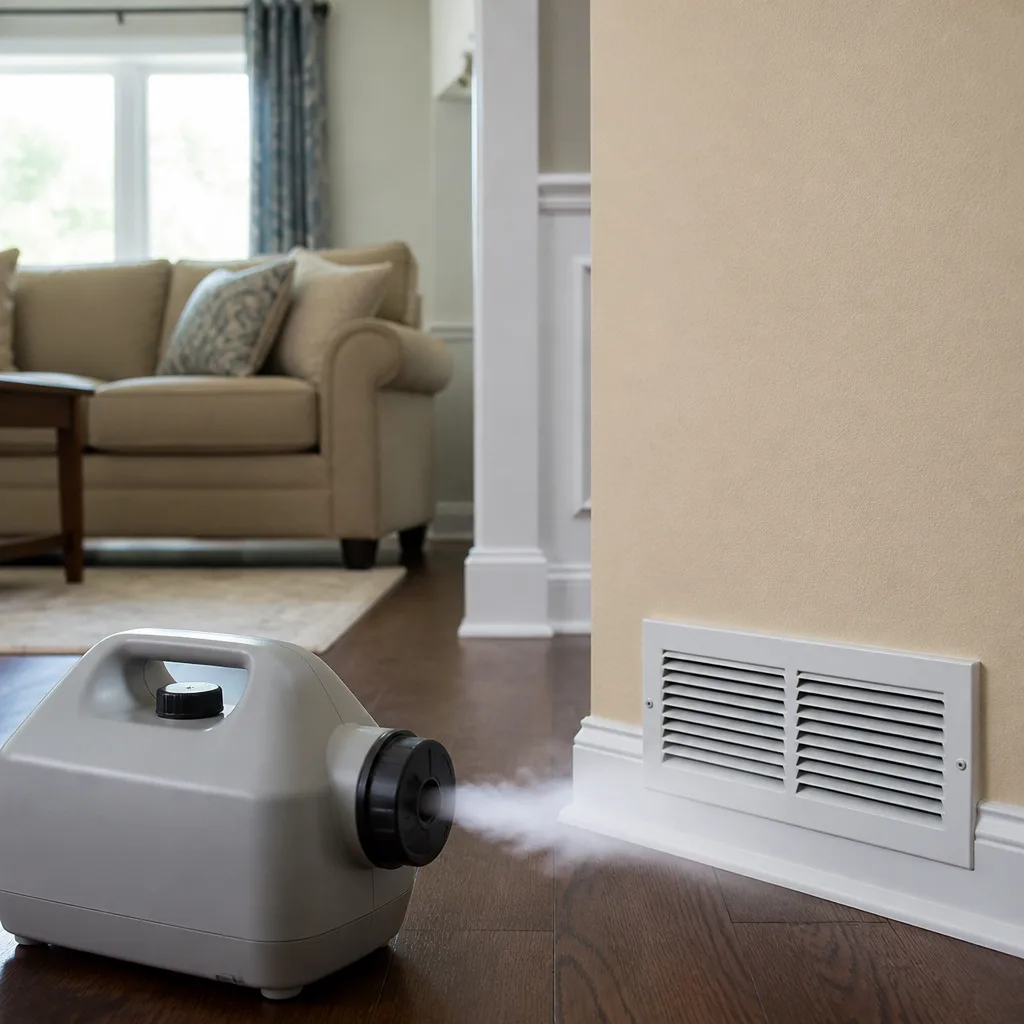 Sanitizing & deodorizing
Whole-system duct and dryer vent check with before-and-after photos - you see exactly what came out of your vents
That "$99 whole-house special" is a bait ad - the real number appears once they are in your hallway, or the "clean" is a shop-vac at the register. We photograph the inside of your ducts before and after instead.
Air Duct Cleaning Permits, Codes & Inspections in Placentia, CA: What You Need to Know
Here’s the part almost nobody tells you before booking a duct cleaning: cleaning your ducts usually needs no permit at all, but the moment someone cuts, re-routes, replaces or reseals ductwork, you’ve crossed into permitted mechanical work under California’s building and energy codes. That line is invisible to most homeowners in Placentia, and it matters. Unpermitted duct work can complicate a home sale, affect an insurance claim, and force you to disclose unpermitted alterations down the road. This guide walks through where that line actually sits, what the City of Placentia Building Division tends to require, how Title 24 duct sealing and leakage testing work in practice, why sanitizing products have to meet CARB rules, and the paperwork you should keep.
Quick Answer
In Placentia and across California, routine air duct cleaning is maintenance and does not require a permit. Any work that alters the duct system itself – repairing damaged runs, replacing flex or rigid duct, re-routing supply or return lines, or installing new sealed connections – falls under local mechanical permits and California’s Title 24 energy code, which sets duct sealing and leakage requirements. Cleaning removes debris; modification changes the system, and that’s the trigger for inspection.
Styles & brands we work with
- Whole-home duct cleaning
- Dryer vent cleaning
- Camera inspection
- Sanitizing & deodorizing
Table of Contents
- Where Duct Cleaning Ends and Permitted Work Begins in California
- What the City of Placentia Building Division Requires
- How Title 24 Affects Duct Sealing and Leakage Testing
- Sanitizing Agents and California’s CARB VOC Rules
- What an Inspection of Duct Work Actually Looks Like
- The Paperwork to Keep After Any Duct Work
- How Unpermitted Duct Work Affects Insurance and Home Sales
- Cleaning, Repair, and Sealing: What Each Service Involves
Where Duct Cleaning Ends and Permitted Work Begins in California
The clearest way to think about it: if the duct system comes out the other side unchanged, it was cleaning. If the shape, routing, material, or connections change, it was construction. California’s building codes treat duct modification as mechanical work, the same category as installing or altering other parts of an HVAC system. Cleaning a system that stays exactly as it was is not construction, and no building department expects a permit application for a vacuum and brush pass through the ducts.
The line gets crossed in these situations:
- Repairing a crushed or disconnected run. Even replacing a short section of flex duct counts as altering the system, and it needs a mechanical permit in most California jurisdictions.
- Resealing joints and connections as part of a repair. Sealing during a permitted repair is part of that scope. Sealing on its own is a gray area that varies by jurisdiction, and worth a phone call to the building division before scheduling.
- Adding, removing or relocating vents, registers or returns. Any new opening in the system is mechanical work.
- Replacing duct runs during an HVAC changeout. If a new air handler or furnace is going in and the ducts are being replaced, the permit for the HVAC work typically covers the duct work as part of the same scope.
- Converting flex to rigid duct or changing duct size. These change the system’s performance and energy characteristics, so they fall firmly under Title 24.
What does not require a permit: cleaning debris from existing ducts with professional-grade equipment, sanitizing the interior of unchanged ductwork, and cleaning the blower compartment and accessible components as part of that cleaning. Those are maintenance.
In our experience on Placentia jobs, one of the biggest problems isn’t damaged ductwork – it’s ductwork that was never sealed properly at installation. Builders in the area used a lot of flex duct with taped and mastic joints that have since loosened or separated. When we find those during a cleaning, we can repair and reseal them the same visit rather than scheduling a second contractor, and we tell the homeowner plainly when the repair scope crosses into permitted work so they can decide how to proceed with the city.
What the City of Placentia Building Division Requires
The City of Placentia Building Division issues the mechanical permits that cover duct work in this city. The division operates as part of the city’s Community Development Department, and the fundamental rule is simple: any alteration to a duct system in Placentia requires a mechanical permit application, plan review for larger scopes, and one or more inspections before the work is signed off. Cleaning-only services are not in the permit stream.
Here’s how the process usually moves for a permitted duct repair or replacement in Placentia:
- Permit application. The contractor submits the scope of work, including what duct sections are being altered, and whether this is a repair, replacement or extension of an existing system.
- Plan review. For small repairs, this is often a counter review. For larger scopes – partial re-routing, duct replacement tied to an HVAC changeout – the division may require drawings or energy compliance documentation.
- Rough inspection. The inspector looks at the duct work before it’s covered or finished – connections, sealing method, materials, and whether the work matches the approved scope.
- Title 24 verification. If the scope falls under Title 24, the inspector reviews the duct sealing and leakage documentation.
- Final inspection and sign-off. Once the work passes, the permit is closed and a record exists in the city’s permit history.
A practical detail worth knowing: Placentia’s older housing stock – especially the neighborhoods around the older core of the city, where homes date back decades – often has original duct systems with galvanized rigid ducts in the attic and short runs to ceiling registers. Those older systems sometimes require more careful inspection than new flex installations because it’s harder to see what’s inside the ducts and the connections are more likely to have loosened over time. We see this a lot in Placentia, and it’s a reason the duct repair and sealing side of our work matters as much as the cleaning.
For scheduling an inspection or asking a specific scope question, the Building Division is reachable through the city’s website and permit counter. Ask directly: “Is a permit required for resealing these joints on an existing duct run?” The answer depends on the contractor’s scope description, so it’s worth getting in writing.
How Title 24 Affects Duct Sealing and Leakage Testing
California’s Title 24 energy code has been tightening duct requirements for years, and the direction is clear: a duct system that leaks is a duct system that fails compliance. Title 24 sets requirements for duct insulation, sealing at joints and connections, and – critically – leakage testing when ducts are altered as part of permitted work. The testing isn’t done with a leaf blower and a flashlight; it’s a calibrated pressure test that measures how much air escapes the system at a specified pressure.
In practical terms, what you should expect if duct work in Placentia falls under Title 24:
- Sealing requirements. All joints, seams, connections, and penetrations must be sealed with mastic, approved tape, or an equivalent code-compliant method. Tape alone is often rejected because it fails over time – mastic is the standard.
- Insulation requirements. Duct runs that pass through unconditioned space – like most attic ductwork in Placentia – must meet minimum insulation values.
- Leakage testing. Where the code requires a leakage test, the contractor uses a duct blaster or equivalent calibrated equipment to pressurize the system and measure leakage. The result is reported as a percentage of total system airflow.
- Documentation. The test results and compliance documentation go into the permit file and are reviewed by the inspector at final.
Why does this matter to a homeowner who just wants clean ducts? Because it separates the work into two lanes. Cleaning your ducts in Placentia can happen without any of this – no test, no documentation, no inspection. Repair or replace a duct run and the code kicks in, the contractor’s scope needs to reflect that, and the inspector will want to see compliance paperwork at the end.
This also cleans up a common confusion we hear: homeowners sometimes ask “is duct cleaning covered by Title 24?” It isn’t, because cleaning doesn’t change the system’s energy performance. Sealing and repair do, and that’s where the code applies. So when we tell a Placentia homeowner that a repair is recommended after cleaning, we’re also telling them the repair is a permitted scope and a different category of service. Better for them to know that upfront than to be surprised when the building department gets involved.
Sanitizing Agents and California’s CARB VOC Rules
Duct sanitizing is where the regulatory picture gets misunderstood most often. California’s Air Resources Board (CARB) regulates volatile organic compounds in consumer and institutional products, and products applied inside an HVAC system fall under those rules. A sanitizing agent that would be legal to use in another state may not be compliant in California, or may have to be applied at a specific dilution or with specific ventilation. A contractor who uses whatever came in the last shipment isn’t necessarily applying a CARB-compliant product.
What to verify before any duct system in Placentia is treated with a sanitizing or antimicrobial product:
- Product name and manufacturer. Ask the contractor to show you exactly what will be applied inside your ducts.
- CARB compliance. The product label or the manufacturer’s technical data sheet should state its VOC content and CARB compliance status. If the contractor can’t produce this, that’s a red flag.
- Application method. Some products are fogged, some are wiped, some are sprayed with specific dwell times. The label specifies, and the contractor should follow the label, not a generic rule of thumb.
- Safety data sheet (SDS). The SDS lists hazards, required PPE, and required ventilation during application. You should know what’s being applied and how long before it’s safe to run the system.
- Post-cleaning vs. post-repair. Sanitizing applied after a thorough cleaning is normal maintenance. Sanitizing used to “cover” a mold problem underneath a crushed duct is not, and a contractor who tries that is a contractor to walk away from.
We use Guardsman-backed sanitizing treatments as part of the sanitizing process, and we choose those specifically because the manufacturer documentation is clear about what the product is, where it’s compliant, and how it’s applied. That documentation matters more than brand loyalty, and any contractor you hire in Placentia should be able to hand you the same quality of information. If a contractor waves off the question with “it’s EPA-approved,” ask for the actual product data sheet – EPA registration and CARB compliance are separate issues, and both need to be current.
What an Inspection of Duct Work Actually Looks Like
If a permit applies to your duct work in Placentia, the inspector isn’t going to open every ceiling grille and stare into the ducts. That’s not how the process works. The inspection is a focused review of the permitted scope, and it’s usually quick – the same visit checks that the connections are sealed, materials match the approved scope, the insulation value is as specified, and the leakage test documentation is present if it’s required.
What the inspector checks in a typical duct repair or replacement:
- Visible connections and joints. Are the joints sealed with mastic or approved tape? Do the connections look mechanically secure?
- Materials. Does the duct material match what the permit application said? Mismatched flex, rigid, or insulation is a common correction.
- Access. Are there access points for future service and inspection? Codes typically require access to key components.
- Insulation. Ducts in unconditioned space need insulation at the code-minimum value.
- Leakage test report. Where the code requires a test, the report needs to be on site and match the required threshold.
If you use a professional who knows the local inspection rhythm, this section rarely produces surprises. The problems come from work done without a permit and later reviewed during a home sale or insurance claim, when a building inspector has to look at what’s actually behind the drywall with no permit history to reference. In our experience in Placentia, that’s the moment things get expensive. It’s also the moment we hear the same line: “the previous owner did it, I assumed it was fine.” Usually it wasn’t, and the correction is more than just paperwork.
The full inspection pathway – cleaning through repair, sealing, sanitizing, and sign-off – is what HVAC cleaning looks like when the whole system is being brought back to standard, not just the visible parts.
The Paperwork to Keep After Any Duct Work
Documents disappear. Contractors close, files get lost, a warranty booklet gets thrown out in a move. If any duct work is ever done on your Placentia home – and especially if it’s permitted – build a file and keep it somewhere you’ll find it. This is the difference between an easy home sale and a painful disclosure negotiation years later.
Here’s the documentation to request and keep:
- The permit number and final inspection card. If a permit was pulled, ask for the permit number and the signed final inspection card. Both should be kept in the file.
- The written scope of work. Exactly what was done, including duct sections repaired, materials used, and sealant type.
- Title 24 compliance documentation. The leakage test report and energy compliance forms, if the scope required them.
- Product data sheets for any sanitizing agent. Including the CARB compliance statement on the label or technical sheet.
- Manufacturer warranty paperwork. Any equipment installed – air handlers, registers, Honeywell or Aprilaire products if those were part of the scope – with warranty terms documented.
- Before-and-after photos of the ducts. Not the same as proof of compliance, but proof the work was done. Photos of the visible duct work, inside the ducts where accessible, and of the connections post-sealing.
- Contractor contact information and the service date. So that if a question comes up later, you know who to call.
If the work was cleaning only, the documentation set is lighter – the invoice, the service date, and before-and-after photos are usually enough. The heavier documentation list applies to anything that crosses into permitted scope.
How Unpermitted Duct Work Affects Insurance and Home Sales
Unpermitted duct work is one of the more underappreciated problems in a home sale, and it shows up in two ways: insurance and disclosure. On the insurance side, most homeowner policies include language about alterations made without required permits, and some carriers will use unpermitted work as a reason to deny a claim or reduce a payout if a loss is traced to that work. Coverage varies by carrier and policy, so it’s worth asking your insurer directly what their position is on unpermitted alterations.
On the sale side, California’s real estate disclosure rules are broad. Sellers are expected to disclose known material defects and known unpermitted work. If a duct repair was done without a permit and the current owner knows about it, that becomes a disclosure item. If the current owner doesn’t know about it but the buyer’s inspector finds it, the transaction can stall while it’s corrected through the local building department – and correction after the fact is more expensive than doing it right the first time.
This is why we tell Placentia homeowners not to treat a duct repair like a small handyman job. It isn’t a big financial job in most cases, but the paperwork is the point. A mechanical permit costs less than the awkward conversation at closing, and the permit history serves as proof the work was done properly. The correction always takes longer than the original work would have.
For property managers in Placentia, the same logic applies to any building you oversee. Keeping a permit and documentation file for each unit – duct work, HVAC changeouts, any permitted alteration – protects you against the same disclosure and insurance issues, and it makes turnover cleaner when a tenant asks for documentation of the air quality work that’s been done.
Cleaning, Repair, and Sealing: What Each Service Involves
These three get lumped together in advertising, but they’re separate scopes with different permit implications. Knowing which one you’re being quoted for is the single most useful thing you can learn from this guide.
Cleaning is a maintenance service. Inside the ducts, the technician uses a vacuum and agitation system – we run Rotobrush and Nikro equipment for this, which is purpose-built for the job and moves a lot more air than a shop vacuum. The system is put under negative pressure and the debris is captured at the source. No permit, no inspection. Cleaning brings the interior back to a clean baseline and lets the technician see what’s actually going on inside the ducts, which is often more useful than the cleaning itself.
Repair is when the technician finds a compromised section – crushed flex duct, disconnected joints, collapsed rigid sections, torn insulation – and brings it back to spec. This is permitted work in most California jurisdictions, and it’s part of what we do on the same visit as a cleaning when we find the problem. The alternative is scheduling a separate contractor, waiting for a second appointment, and paying for a second mobilization. We’d rather fix it while we’re there.
Sealing is the joints-and-connections layer of repair. Every joint in a duct system is a potential leak, and sealing is the mechanical code and Title 24 response to it. Mastic is the standard sealant. Tape alone often fails; the code language explicitly recognizes that. Sealing may require a permit depending on the jurisdiction and the scope, and it may trigger a leakage test under Title 24.
The full pathway – cleaning, then repairing what we find, then sealing the repaired sections, then sanitizing – is what a full-system service looks like when a contractor has all the pieces. That’s why we handle air duct cleaning, repair, and sealing under one roof. It’s also why we don’t hand homeowners a report and leave; we fix what we find, and the permit documentation reflects the work actually done.
The same equipment standard carries over to dryer vent cleaning, which is a separate code issue (fire safety) but a related service. Clothes dryer vents are not part of the HVAC duct system, and cleaning them doesn’t fall under mechanical permits, but the equipment and the discipline around documenting the work is the same. Plenty of Placentia homes have dryer vents routed through walls or up through the attic, and those are the ones that need the most attention.
Common Mistakes to Avoid
- Assuming all duct repair is “just cleaning.” Resealing a single disconnected joint can cross into permitted work, and thinking of it as a small cleaning job is how the permit gets skipped. If a contractor is going to cut or re-route anything, ask whether a permit applies before the work starts.
- Skipping the permit to save time. The permit is the documentation that protects you at resale and in an insurance claim. The time saved on the front end costs more at closing.
- Accepting “EPA-approved” as a complete answer on sanitizing agents. EPA registration and CARB compliance are separate rules. In Placentia, both apply, and the product data sheet should confirm current compliance for the sanitizing agent being applied inside your ducts.
- Not asking about Title 24 leakage testing. If duct work falls under Title 24, the leak test is part of the required documentation. A contractor who says “we don’t need to test” for a permitted scope is telling you they’re not familiar with current California compliance requirements.
- Throwing away the final inspection card. The permit number and signed final are the two documents that resolve most future questions. Keep them with the home’s other improvement records, not in a contractor folder that gets cleared out.
- Hiring whoever quoted the lowest “cleaning + repair” bundle. A bundle that crosses into permitted work without a permit is a bundle you don’t want. Check the scope, check the permit, check the documentation, then check the price.
- Forgetting that Placentia’s older homes often have original duct systems. Original duct work from decades ago is more likely to have compromised connections, which is exactly the repair scope that needs the permit and documentation discipline this guide covers.
See the difference
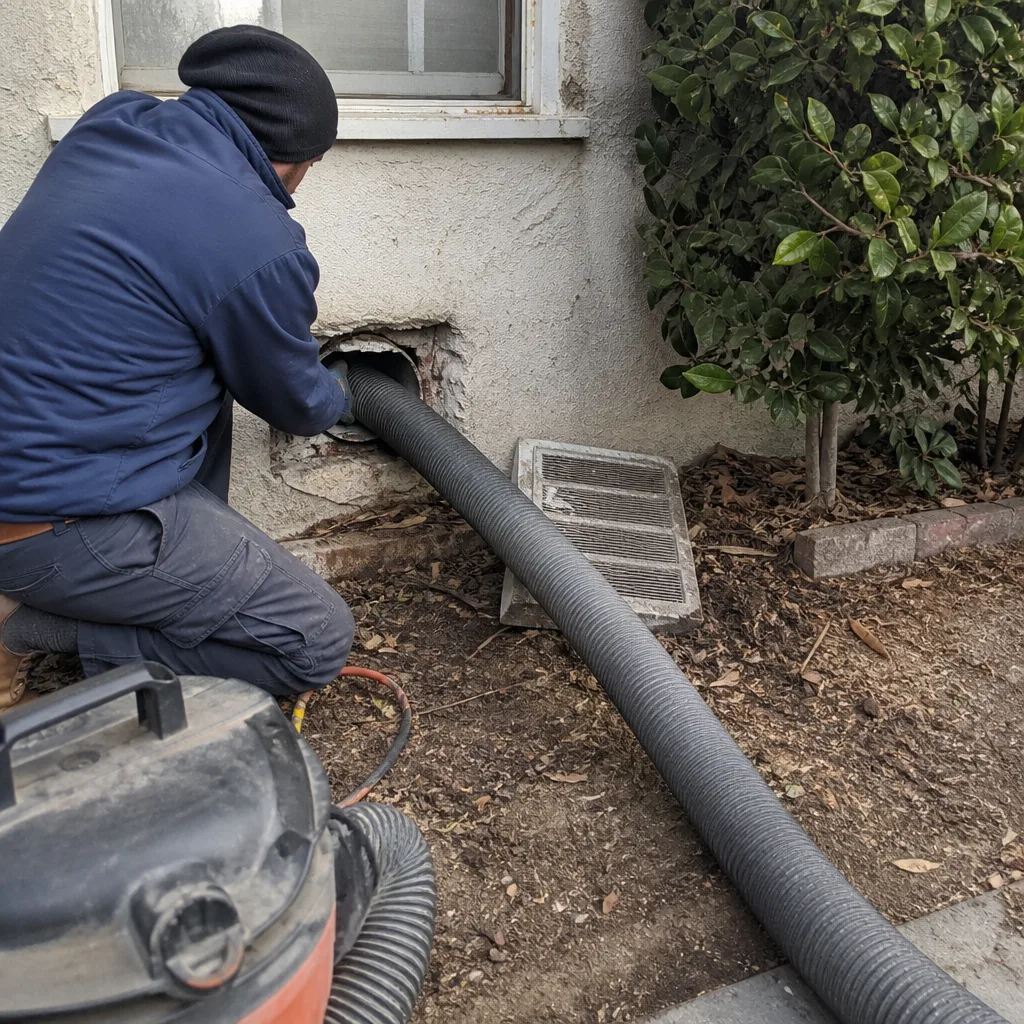 Before
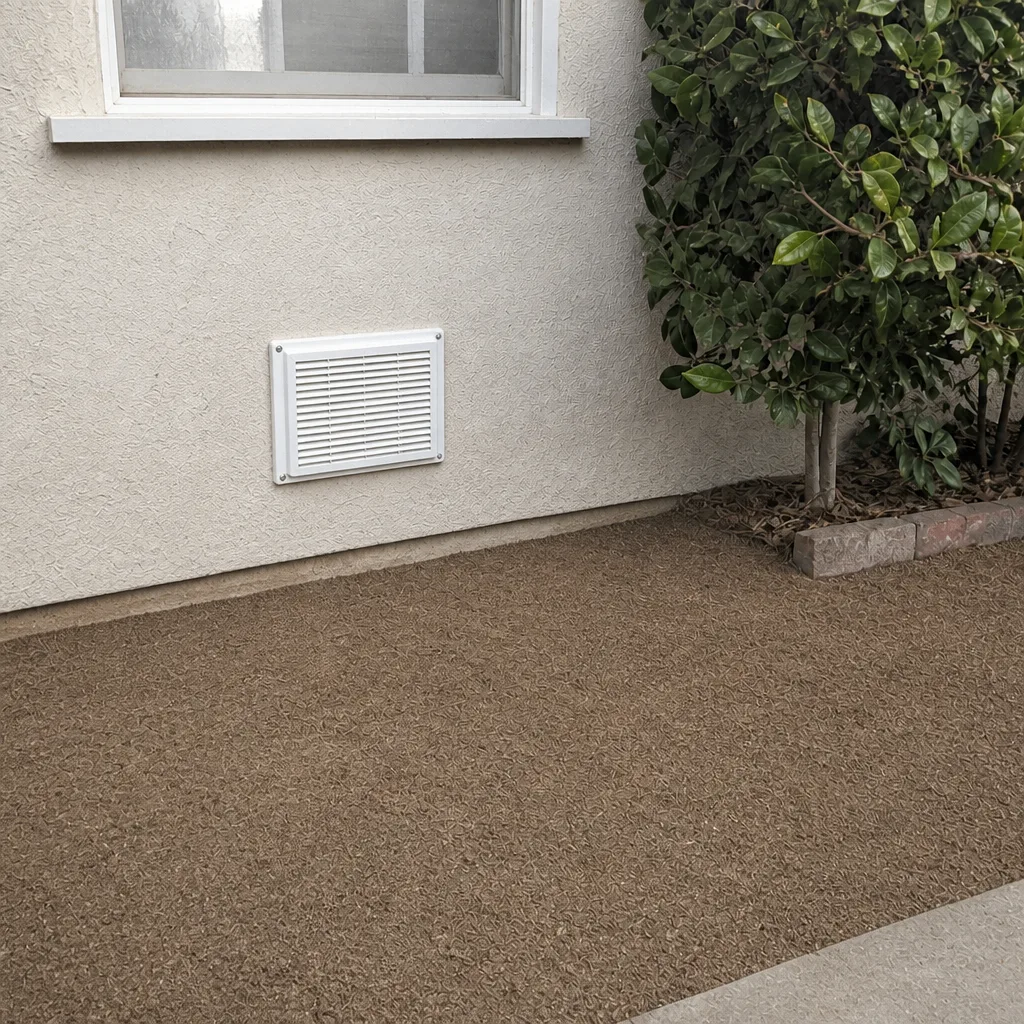 After
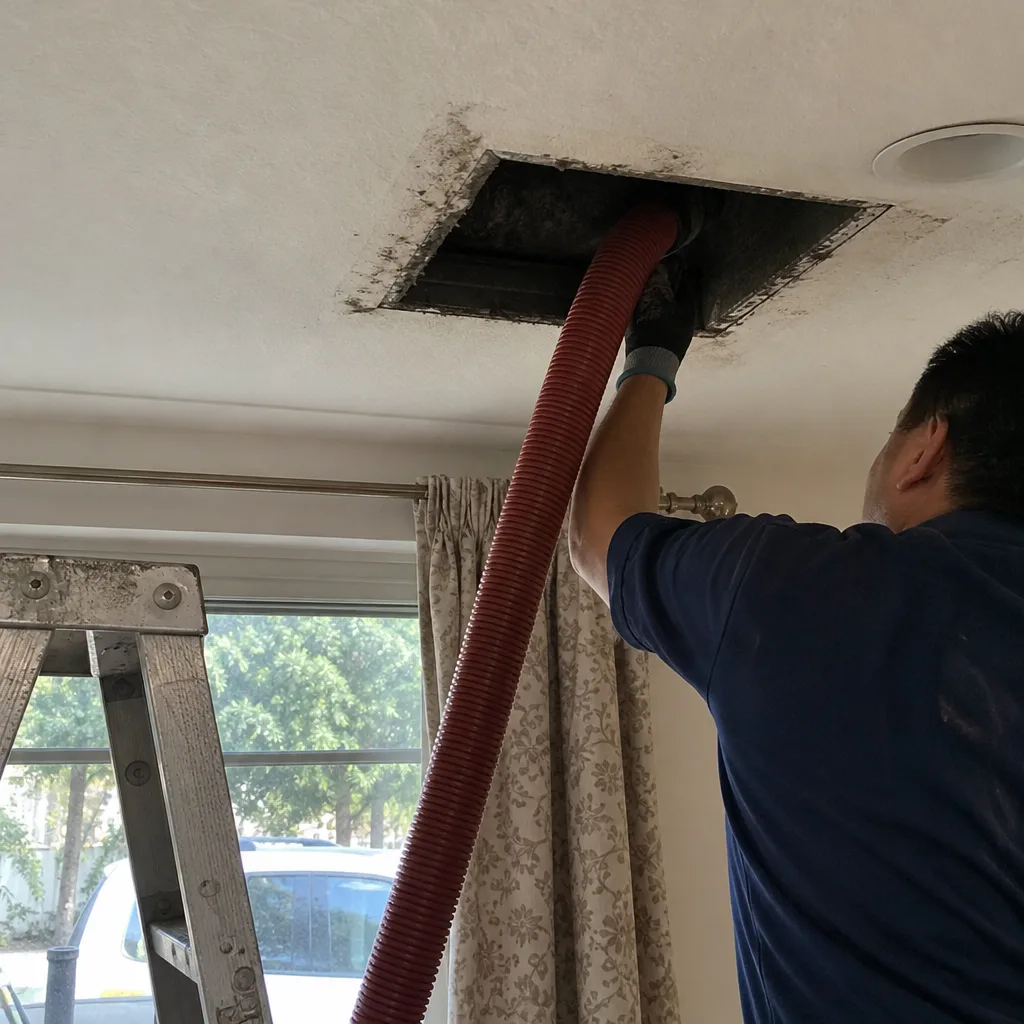 Before
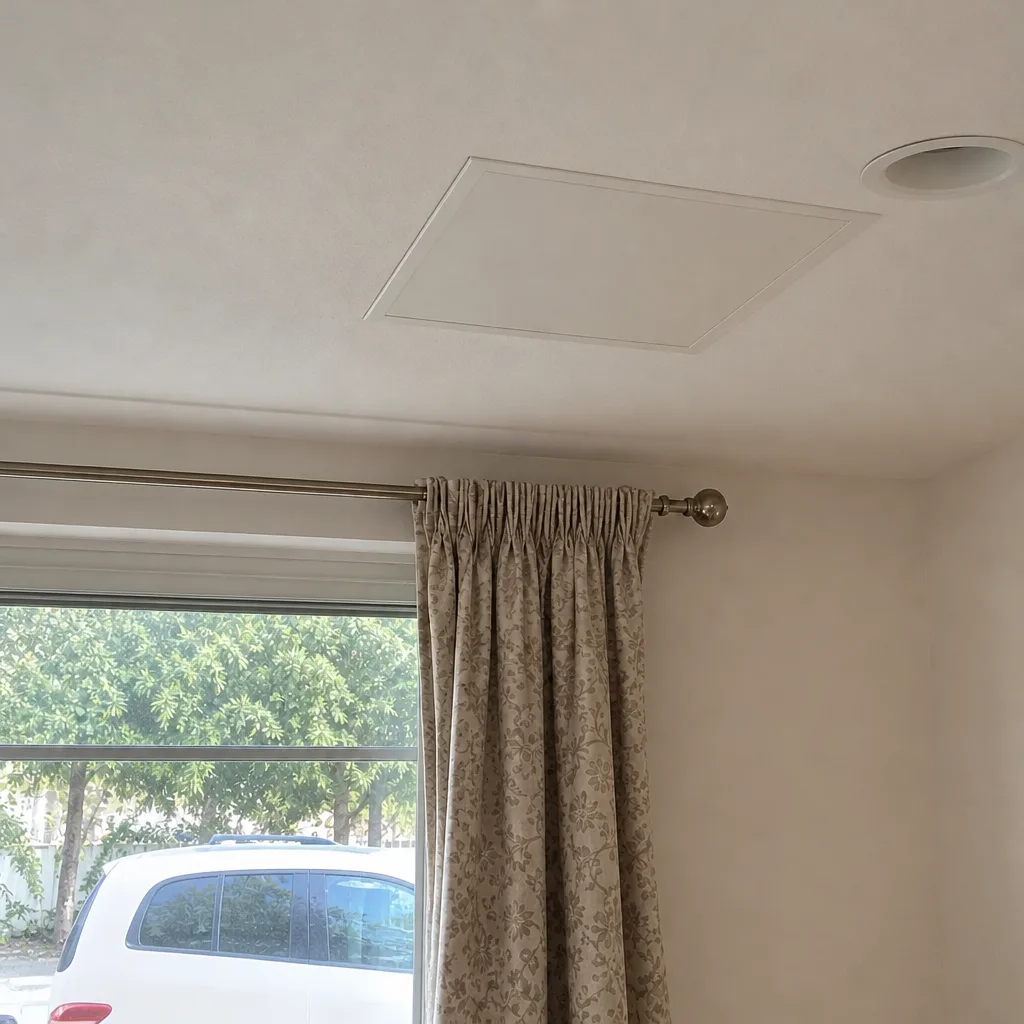 After
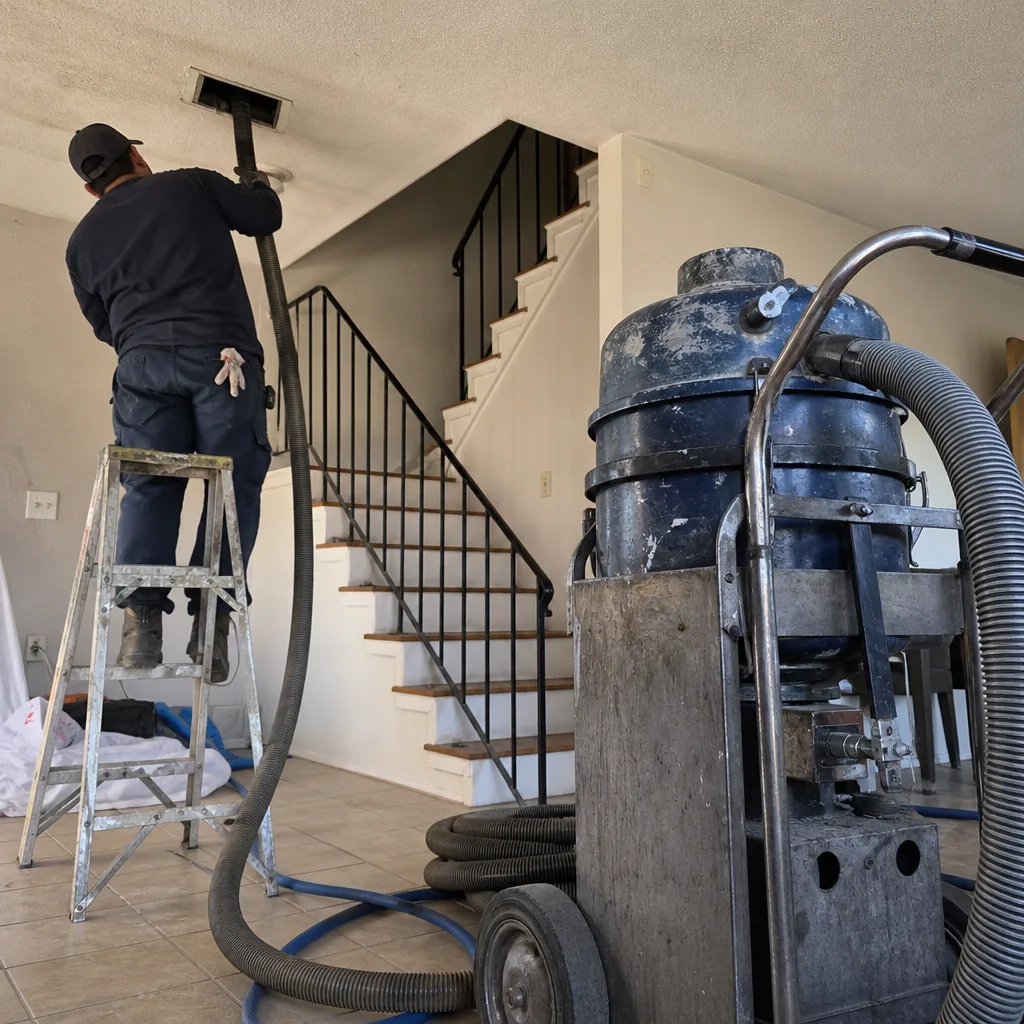 Before
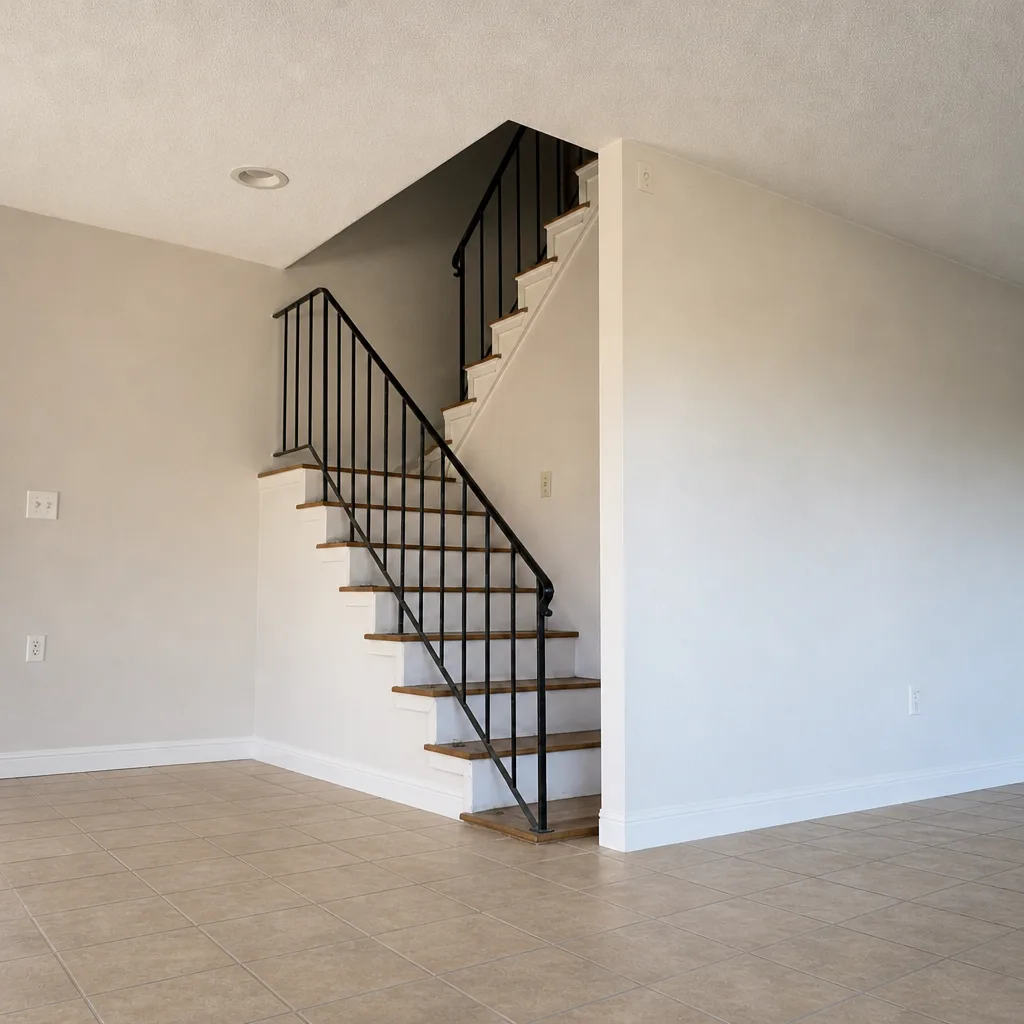 After
When to Call a Professional
Call a professional if you’ve never had your ducts cleaned and you’re noticing more dust than usual, if a recent renovation kicked up drywall or construction dust into the system, if you can see crushed or disconnected duct work in the attic or crawlspace, if you’re getting uneven airflow between rooms, or if you’re preparing to sell and don’t have documentation for prior duct work. Those are all situations where a professional inspection and cleaning will tell you whether you’re in cleaning-only territory or headed toward permitted repair. Placentia Air Duct Cleaning Co offers free estimates in Placentia – call (833) 545-4372. We’ll tell you honestly which side of the permit line your job is on before any work is scheduled.
Frequently Asked Questions
No. Cleaning the interior of existing ducts is maintenance and doesn’t require a permit in Placentia or anywhere else in California. The permit question only comes up when the duct system itself is altered – repaired, replaced, re-routed, or extended. Call (833) 545-4372 if you want us to review your specific situation – estimates are free.
Any alteration to the duct system requires a mechanical permit in most California jurisdictions – that includes replacing a run of flex duct, repairing crushed sections, re-routing supply or return lines, adding or removing registers, or changing duct size. Cleaning and sanitizing unchanged ductwork do not. When in doubt, a call to the City of Placentia Building Division settles it.
Title 24 leakage testing measures how much air escapes a duct system under pressure, using calibrated equipment like a duct blaster. It applies when permitted duct work falls under the energy code – typically replacement or substantial alteration – and the test report becomes part of the permit file. Cleaning alone does not trigger a test. Call (833) 545-4372 for an exact quote on your scope – estimates are free.
Yes. California’s Air Resources Board (CARB) regulates volatile organic compound content in products applied inside HVAC systems, and sanitizing agents must be CARB-compliant to be used legally in Placentia. Ask any contractor for the product’s data sheet showing CARB compliance, and don’t settle for “EPA-approved” as a standalone answer.
Most duct cleaning is priced per system, not per vent, and the exact price depends on the size of the home and the number of systems. We give one flat price per system before any work starts, documented in writing – no per-vent pricing, no bait-and-switch. Call (833) 545-4372 for an exact quote – estimates are free.
Cheap quotes often cover only a partial cleaning, or they’re teaser prices that grow once the technician is on site and finds work to do. The honest comparison is whole-system scope, equipment, documentation, and a written price agreed before work starts. Before-and-after photos of your own ducts are the simplest way to confirm what was actually done.
It can. Most homeowner policies address alterations made without required permits, and some carriers will reduce or deny a claim if a loss traces back to unpermitted work. Whether it affects your coverage depends on your specific policy, so ask your insurer directly. The safer path is to permit the work when required and keep the documentation on file.
The Bottom Line
Cleaning your ducts in Placentia is maintenance and doesn’t need a permit. Repairing, replacing, re-routing or resealing duct work does – it’s mechanical work under California’s building codes, and if Title 24 applies, leakage testing and compliance documentation come with it. Sanitizing agents applied inside the system have to be CARB-compliant, and any contractor using one should be able to produce the product data sheet on request. Keep the permit number, the final inspection card, the compliance documentation, and before-and-after photos together – that file is your protection at insurance-claim time and at home sale. If you’re not sure which side of the line your job falls on, that’s the moment to call. Professional-grade equipment, a documented scope, and one flat price per system agreed before work starts – that’s what we bring to every job in Placentia.
We answer 24/7. Fast dispatch from 7am to 7pm, Sunday through Friday. Call (833) 545-4372 for a free estimate, and we’ll walk you through the permit question on your specific duct system before we ever quote a number.
Written by the team at Placentia Air Duct Cleaning Co.